
Last updated November 21, 2026
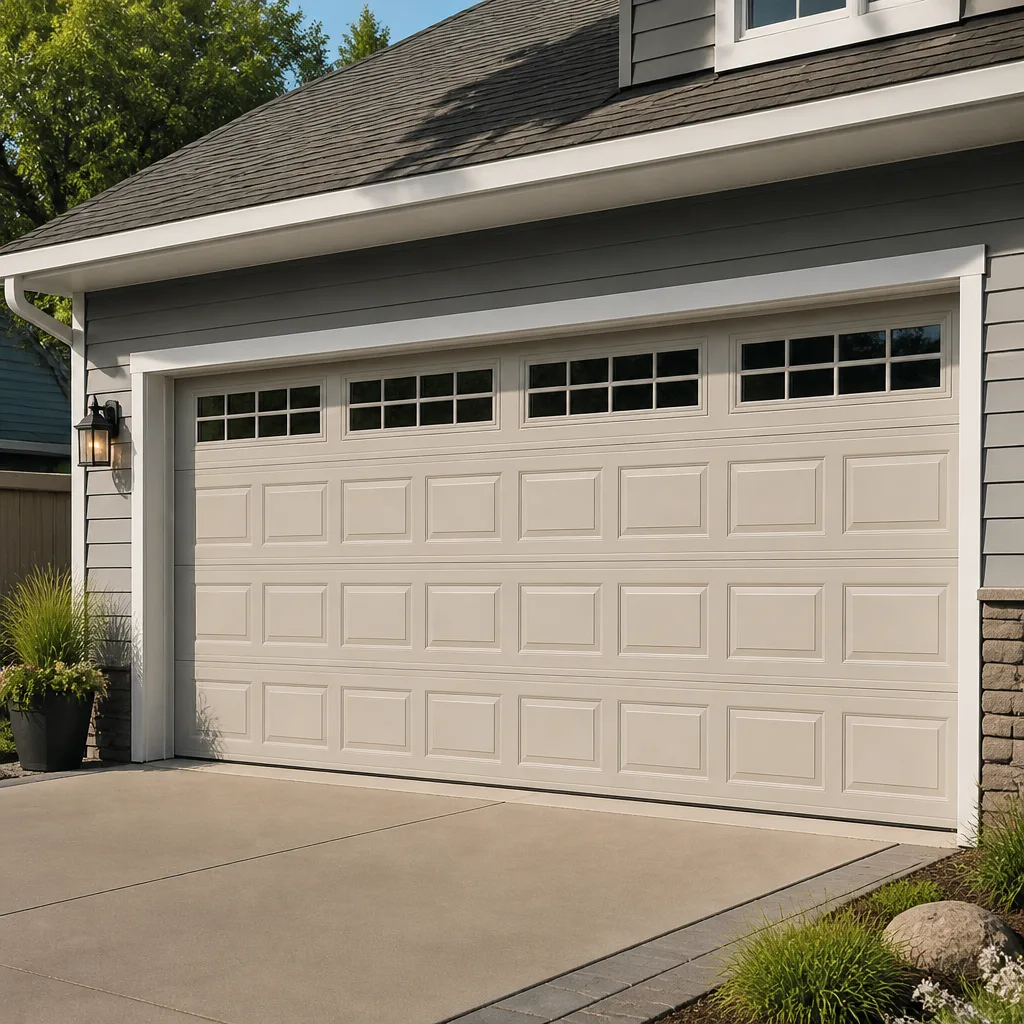 Raised-panel steel
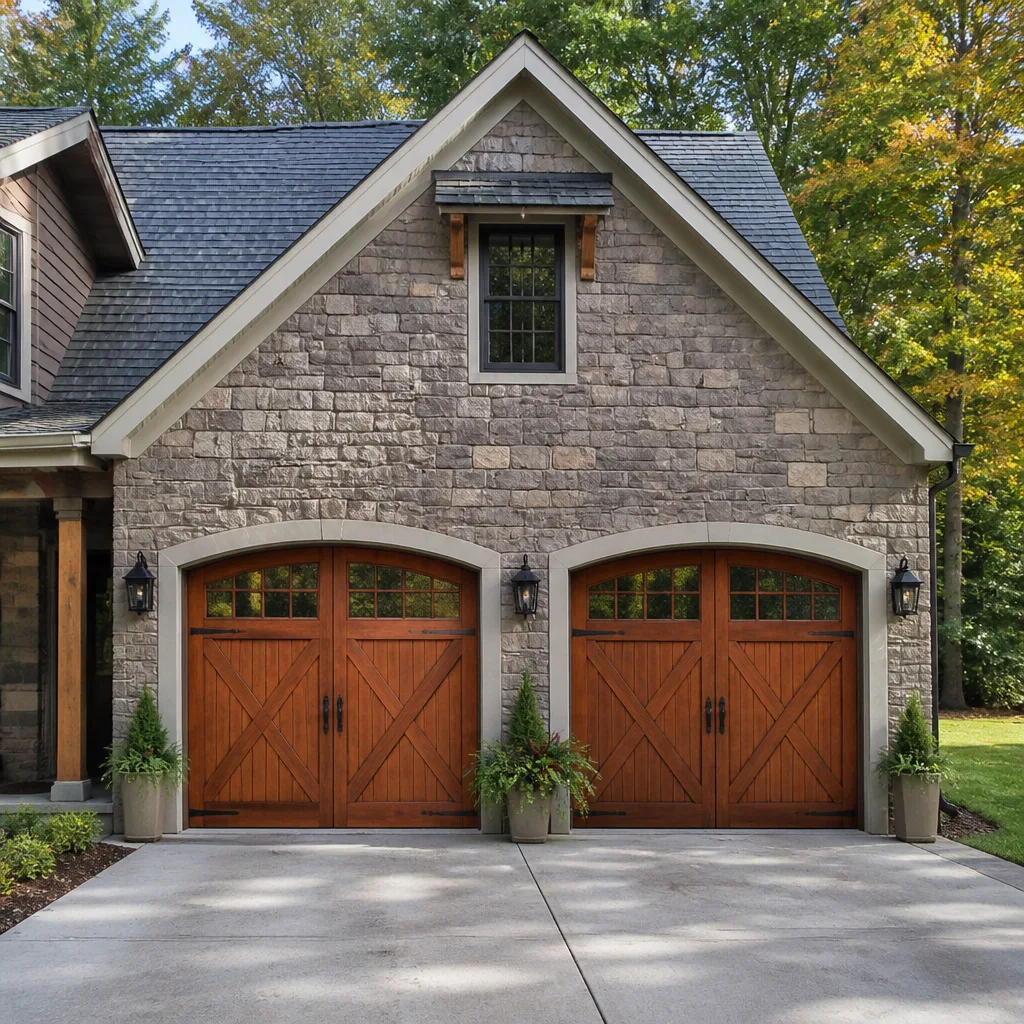 Carriage house
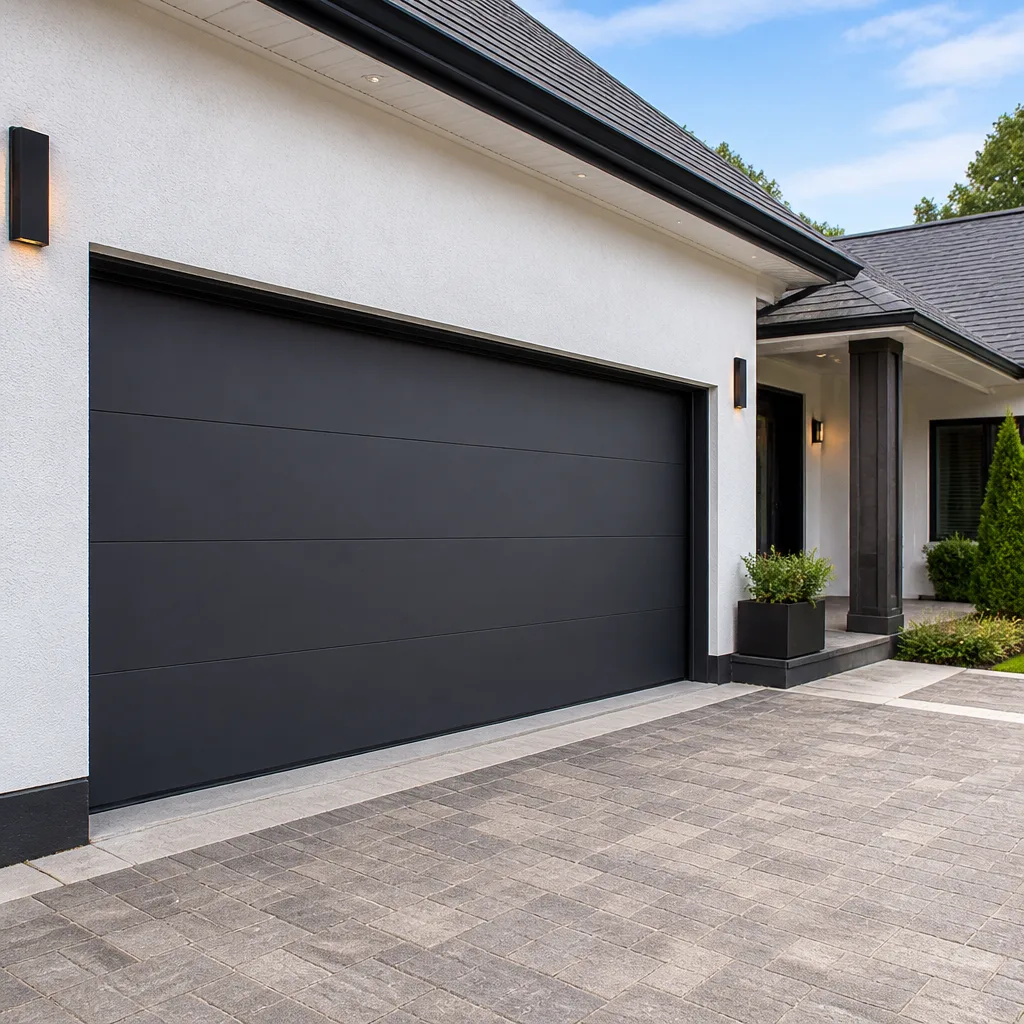 Modern flush
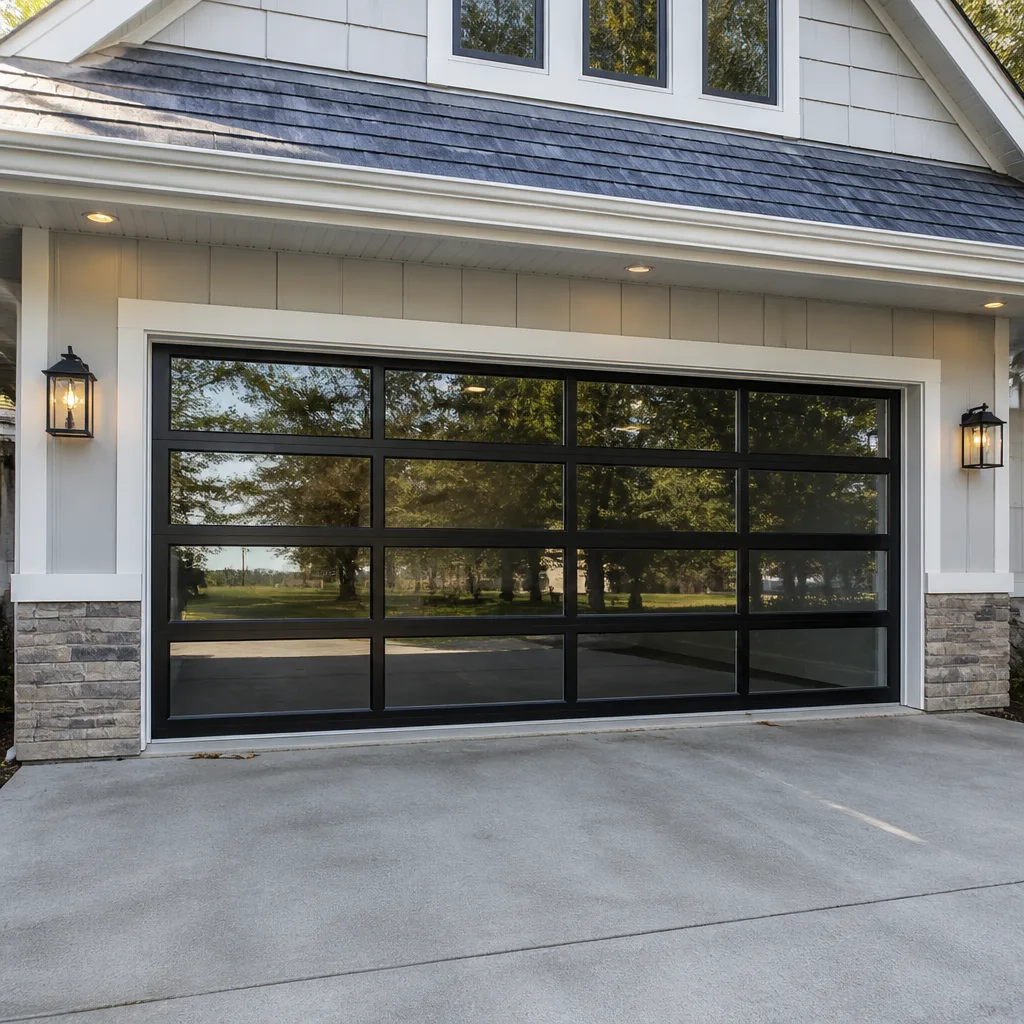 Full-view glass
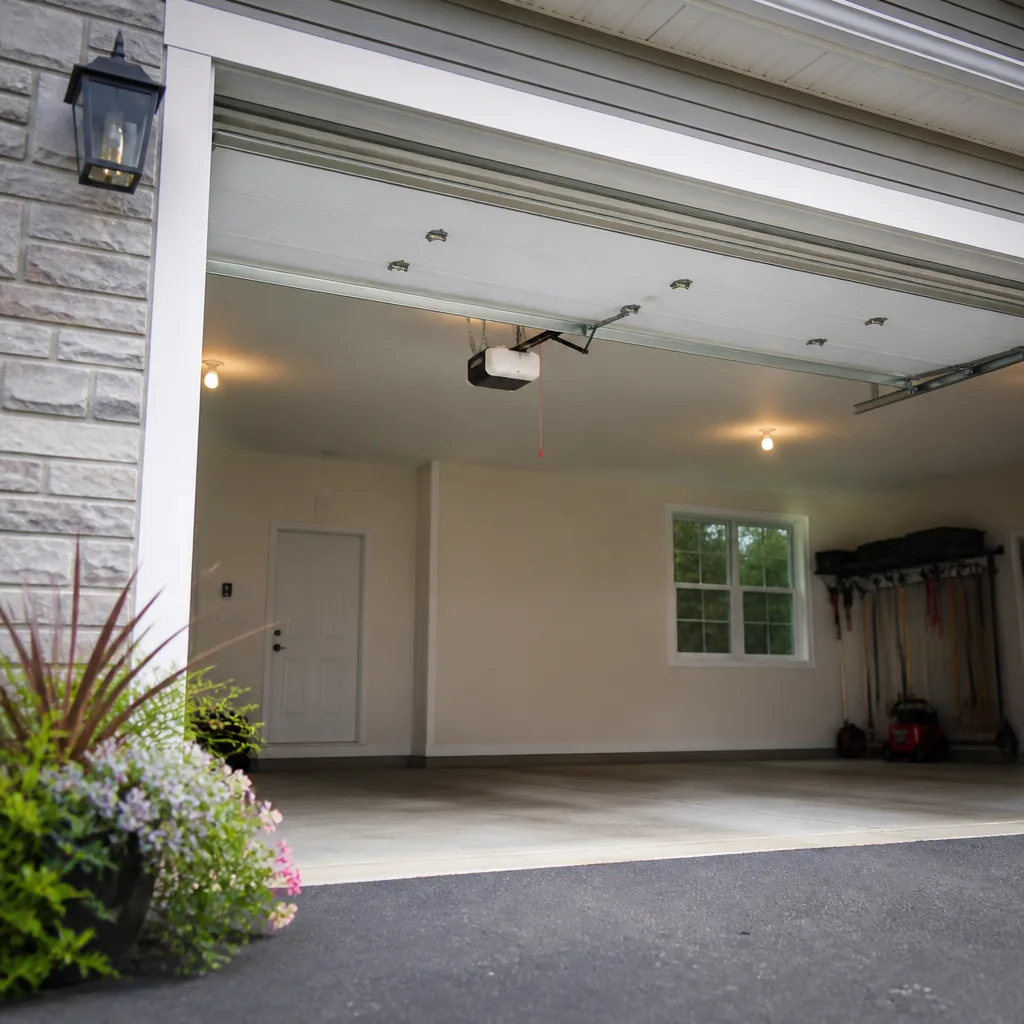 LiftMaster openers
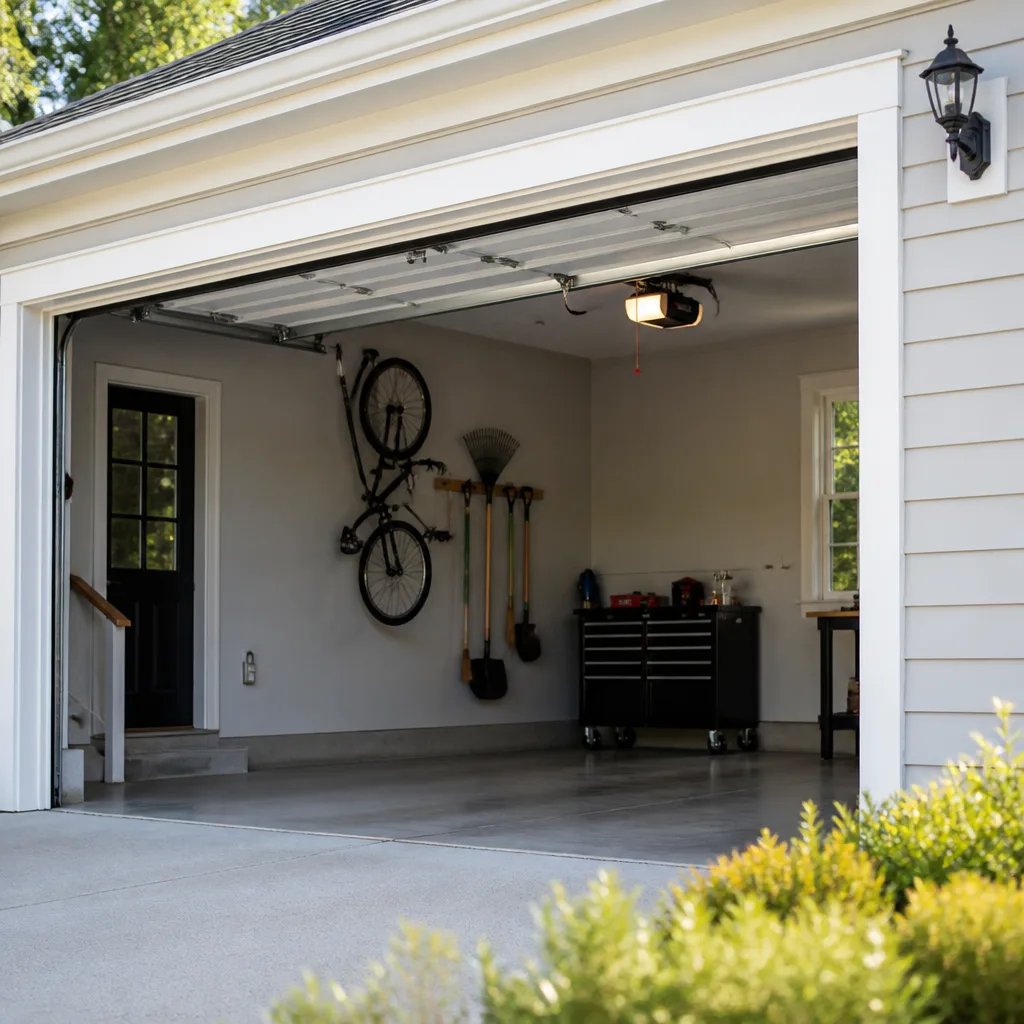 Chamberlain openers
Full 25-point door and opener safety check with every visit - springs, cables, rollers, tracks, and your LiftMaster or Chamberlain opener included
You get a price before we start. It does not change when the pro arrives.
Get your free estimateGarage Door Permits, Codes & Inspections in Cape Coral, FL: What You Need to Know
Most Cape Coral homeowners assume a garage door replacement is a no-permit job. It’s a swap, after all, not an addition or a pool. That assumption is the one that causes trouble later. A door installed without the right paperwork can surface as a failed inspection during a home sale, a wind-damage claim your insurer questions after a storm, or a permit lien recorded against the property. None of those are problems you notice the day the door goes up. They show up months or years later, at the worst possible moment. This guide explains when a Cape Coral garage door permit is actually required, what Florida Product Approval means, and what a Lee County inspector looks for on the job.
Quick Answer
In Cape Coral, a full garage door replacement almost always requires a permit and a wind-load-compliant door covered by a Florida Product Approval. Routine parts swaps – springs, rollers, hinges, opener service – are treated as maintenance and don’t normally trigger one. The permit holder and the code responsibility sit with the licensed contractor doing the installation, but the homeowner is the one who inherits the consequences if it was never pulled.
Styles & brands we work with
- Raised-panel steel
- Carriage house
- Modern flush
- Full-view glass
- LiftMaster openers
- Chamberlain openers
Table of Contents
- When a Garage Door Permit Is Required in Cape Coral
- Florida Product Approval and the NOA Number Explained
- Wind-Load Requirements for Lee County Under the Florida Building Code
- What the Inspector Actually Checks on a Garage Door Installation
- Who Pulls the Permit: Your Role vs. the Contractor’s
- How Unpermitted Work Shows Up in a Real Estate Transaction
- Permits, Wind Damage and Insurance Claims After a Storm
- The Permit Process Step by Step
When a Garage Door Permit Is Required in Cape Coral
The dividing line is replacement versus repair. Put a whole new door in and you’ve changed the building envelope on an opening that resists wind pressure, so the work is permitted. Change a spring, swap rollers, replace an opener or fix a bent track and you’re maintaining an existing, already-compliant assembly. That’s the general rule, and it holds across Cape Coral.
Where it gets murky is the middle ground. A door swap of identical size and make might feel like a repair. It usually isn’t treated that way, because the assembly being installed has to be verified against Florida Product Approval for that specific opening. What’s clear-cut:
- Requires a permit: Full door replacement, changing door type (a sectional for a tilt-up, say), enlarging or altering the opening, installing a door where there wasn’t one, and replacing a door that’s part of the wind-borne debris protection system on a home in the designated zone.
- Usually maintenance, no permit: Spring replacement, cable and drum work, roller and hinge replacement, track realignment, opener motor or control board replacement, remote and safety-sensor service.
- Ask the city: Panel-only replacement, swapping a door to a different model at the same dimensions, and any work after a storm where the original permit history is unclear.
Every garage door replacement we quote in Cape Coral starts with the same question: what does the city want to see on this opening? The answer can vary with whether the home sits in a wind-borne debris region, what the original permit file shows, and whether the previous door was ever documented. That’s why we tell homeowners to ask the city’s building department directly before assuming. Call the permitting office, describe the work plainly, and get the answer in writing if you can. It takes ten minutes and it settles the question.
The other reason this matters: an unpermitted door doesn’t announce itself. It looks identical to a permitted one in the driveway. The difference only surfaces in a records search, which is exactly what happens at sale, at refinance, or when an adjuster walks the property after a storm. And if the door itself is failing or unsafe, permitting isn’t the first call – garage door repair is.
Florida Product Approval and the NOA Number Explained
Florida Product Approval is the state’s system for proving a building product meets the wind and impact requirements of the Florida Building Code. It’s not a manufacturer’s marketing claim. It’s a formal listing, and every approved garage door assembly has a record in the state database. That record is what your inspector looks for.
The identifier you’ll hear most often is the NOA, or Notice of Acceptance. It’s the document number that ties a specific door model – at a specific size, with specific reinforcement – to a validated test result. A door model can be approved at one width and not another, or with a strut installed and not without it. The approval attaches to the assembly as configured, not to the brand name alone.
Here’s how to look up a door’s approval yourself. It’s worth doing before you sign anything:
- Get the exact model number from the door’s label or from the written quote. Not the brand, the model.
- Go to the Florida Building Commission’s Product Approval database, which the state hosts online.
- Search by manufacturer and model, or by the NOA number if your contractor provided it.
- Open the listing and check three things: the product description, the design pressure rating, and the approval’s effective and expiration dates.
- Compare the listed design pressure against the wind-load requirement for your opening (more on that below).
- Save or print the listing page. Keep it with your permit paperwork and your home records.
Why it matters at inspection: the inspector needs to confirm the installed door matches an approved assembly. A door listed under a Raynor NOA but installed at a size outside that listing is a problem. So is a door where the approval has lapsed. When we install a door in Cape Coral, the approval documentation goes with the job – it’s part of the package, not an afterthought. Same logic applies to the opener side, which is why garage door opener repair and replacement often gets handled in the same visit as the door itself.
Wind-Load Requirements for Lee County Under the Florida Building Code
Lee County builds under the Florida Building Code, and the current edition is FBC 2023. For a garage door, the practical effect is that the door has to resist a calculated wind pressure for its specific location and installation. That calculation isn’t guesswork – it comes from the code’s wind maps and the design parameters for the structure, and it produces a design pressure number the approved product has to meet or exceed.
A few things drive that number up or down:
- Wind speed for the site. The code assigns a basic wind speed to the location, and the door’s rating has to cover it.
- Exposure category. A door facing open ground or water sees different pressure than one shielded by surrounding structures.
- Height and the surrounding terrain. Pressure increases with height above grade, though on a single-story Cape Coral home this is rarely the deciding factor.
- Wind-borne debris region status. If the home is inside that region, the code’s protection requirements apply to glazed openings and impact-rated assemblies.
- Door size and reinforcement. A wider door flexes more under load, which is why larger doors often need struts or heavier-gauge sections to hit their listed rating.
What this means in plain terms for a Cape Coral homeowner: the door you buy has to be the right door for your opening, not just a door that fits. Two doors from the same manufacturer at the same nominal width can carry different approved ratings depending on configuration. That’s why the design pressure on your permit application and the design pressure on the NOA listing need to match.
We’ve walked homeowners through this enough times to know where the confusion starts – usually at the showroom, where nobody hands you a wind-load calculation. Before you buy anything, ask what design pressure the door is approved to and what your opening requires. If the two numbers can’t be reconciled, the door is the wrong one no matter how good it looks on the display. The same conversation applies when you’re pricing a full garage door installation in Cape Coral; the approval question should come before the style question.
What the Inspector Actually Checks on a Garage Door Installation
A garage door inspection in Cape Coral isn’t a vague walkaround. The inspector has specific items to verify, and knowing them in advance is the easiest way to avoid a callback. Most of what follows is visible in a few minutes if the installer got it right.
- The door matches the permitted model. Label, model number and configuration should match what’s on the application and the NOA.
- Product Approval documentation is on site or on file. The listing, or the NOA number, has to be verifiable for the installed product.
- Design pressure meets the requirement. The listed rating equals or exceeds what the code calculation specifies for the opening.
- Reinforcement is installed as approved. If the approval calls for struts or specific hardware, it has to be there. Removing a strut after inspection voids the compliance.
- Fasteners and anchorage. The door, track and brackets are attached with the specified hardware, in the specified pattern, into the specified substrate.
- Clearances and operation. The door opens and closes smoothly, clears the header, and the torsion or extension assembly is properly tensioned.
- Opener safety devices. The photo-eye sensors and the door’s reversing function are working, which is a life-safety item on any powered door.
- Weatherseal and perimeter. The bottom seal and side jambs seal correctly against the opening.
One safety note worth being blunt about: the torsion springs and cables on the door are under extreme tension. This is the part of the system most homeowners shouldn’t touch, and the part where an inspection failure caused by unapproved or improperly installed hardware can also become a safety problem. We handle spring work with trained technicians for a reason. If you suspect a spring or cable problem on a door that’s just been installed or inspected, call a professional before you operate it.
The inspection itself is the contractor’s checkpoint, not yours – the licensed installer is normally the one who calls for it and meets the inspector on site. But you should ask for the result. A passed inspection with the documentation attached protects everything downstream: your sale, your refinance and your claim.
Who Pulls the Permit: Your Role vs. the Contractor’s
This is where more Cape Coral homeowners get confused than anywhere else. The licensed contractor pulls the permit and is the responsible party of record. The homeowner, under Florida law, has the legal right to pull permits on their own owner-occupied property – but that right comes with obligations most people don’t want.
What the contractor handles:
- Applying for the permit in their name and license
- Verifying the door’s Product Approval and design pressure for your opening
- Submitting plans and product documentation the city requires
- Performing the installation to the approved configuration
- Calling for and attending the inspection
- Closing the permit out once it passes
What the homeowner is responsible for:
- Confirming a permit is being pulled before work starts – ask to see the permit number
- Keeping copies of the permit, inspection result and NOA documentation with your home records
- Disclosing permitted and unpermitted work at sale
- Watching for a lien recording on the property and understanding what it means
The owner-builder scenario is where people get hurt. If you pull the permit yourself and hire an unlicensed installer, you’ve become the responsible party for code compliance. The city doesn’t care that a subcontractor made the mistake. And if the door wasn’t installed to its approved configuration, you’re the one who owns the correction. We’re firm on this: on a Cape Coral garage door replacement, let the licensed installer pull the permit. It costs you nothing extra to have the right name on the paper, and it puts the inspection obligation on the party best able to meet it.
One local footnote worth knowing: a lot of Cape Coral homes in the older canal neighborhoods have had multiple owners, and permit records from early installations aren’t always complete. If your records are thin, that’s not a reason to skip the permit – it’s a reason to get the current work properly documented, so the next buyer finds a clean file.
How Unpermitted Work Shows Up in a Real Estate Transaction
Unpermitted garage door work is invisible until it isn’t. It surfaces at three points, and each one costs you time and leverage.
During a home inspection. A buyer’s inspector checks permit history as a matter of course. An open or missing permit on a door replacement gets flagged, and the buyer’s agent asks for documentation. You either have it or you don’t.
During the title and closing process. Title searches turn up recorded liens. An unpaid permit from an installation can appear as a lien against the property, and it has to be resolved before closing. Sometimes the seller’s payoff is small. Sometimes the process is slow enough to delay the sale.
During appraisal and insurance review. An insurer or appraiser looking at a wind-borne debris opening needs to know the door is a compliant assembly. Missing documentation makes the door an unknown quantity, and unknowns get treated conservatively.
Remediation generally involves three things: proving the installed product was approved, inspecting the actual installation, and either closing the permit retroactively or removing and reinstalling to the approved configuration. None of those are free, and the cost is entirely avoidable by pulling the permit at the time of installation. When a buyer’s agent asks “was the garage door permitted?” the answer you want is a permit number, an inspection result and an NOA listing – not a promise that it was fine.
We do recommend one counterintuitive point: disclosing the situation early is better than hoping it doesn’t come up. A clean, remediated file is usually worth more in a negotiation than an unspoken gap the buyer’s inspector discovers on their own schedule.
Permits, Wind Damage and Insurance Claims After a Storm
This is the part of the story that turns a paperwork oversight into a financial one. An insurance carrier covering a Cape Coral home has to evaluate wind-damage claims against the building code and the documented condition of the property. An unpermitted or undocumented garage door is a compliance question, and compliance questions can affect how a claim is handled.
What typically matters in a post-storm claim:
- Whether the damaged assembly was permitted and inspected at installation
- Whether the installed door matches a current Florida Product Approval listing
- Whether the installation matched the approved configuration
- Whether you have the documentation to prove it
We can’t speak for any specific carrier, and we won’t pretend the outcome is predictable. What we can say is that a homeowner with a complete permit file and an NOA listing has a much simpler conversation with an adjuster than one without. And there’s a related consideration: when a storm-damaged door needs to be replaced, the replacement still needs a permit. Emergency repairs to make a home secure typically have their own process, and permanent replacement follows the normal permitting path. That means the smart move after a storm is to ask the city what’s required now, before the repair work begins – not after.
The permit file is part of your home’s storm readiness. Keep it with your insurance documents. If your current door is held in place by hardware that’s bent, or a spring is broken, don’t wait on the paperwork question to get it looked at. Call Cape Coral Garage Door Repair Co and we’ll tell you what the job involves.
The Permit Process Step by Step
Here’s what the sequence looks like for a standard Cape Coral garage door replacement, from quote to closed permit. Timelines depend on the city’s permitting load, so we don’t quote days – the sequence is what stays consistent.
- Get a written quote that names the door model and size. The model matters because the approval attaches to it, not to the brand alone. Ask what design pressure the door is approved to.
- Confirm your opening’s wind-load requirement. Your installer runs the calculation, or asks the city if the records are unclear. This establishes whether the door on the quote is the right one for the opening.
- Check the Product Approval. Look up the model in the state database or ask for the NOA number. Verify the listing is current and covers your configuration.
- The licensed contractor applies for the permit. The application includes the product documentation and the open-protection details. Ask for the permit number and keep it.
- Installation happens after the permit is issued. Work doesn’t start before the permit is in hand. That’s the simple test.
- The contractor calls for the inspection. The installer meets the inspector on site with the approval documentation available.
- The permit closes. You get a copy of the closed permit and inspection result. Put it with your home records, next to your insurance documents.
In our experience, the steps that trip up homeowners are the second and fourth – the wind-load calculation and the question of who’s pulling the permit. Both get resolved with a single phone call to the right party, and both protect you more than they cost you. Our technicians have up to 14 years of experience with door and opener installations and the paperwork that goes with them, and we’re happy to walk you through what your particular Cape Coral property needs.
Common Mistakes to Avoid
- Treating every door swap as maintenance. A same-size replacement still has to be verified as an approved assembly. Ask the city whether your job is a permit job, and get the answer before the door is ordered.
- Skipping the Product Approval lookup. A door that fits but isn’t approved for your opening in Lee County is a failed inspection waiting to happen. Check the model number, not the brand name.
- Pulling the permit yourself and hiring an unlicensed installer. That combination makes you the responsible party for code compliance. Let the licensed installer’s name go on the permit.
- Removing door reinforcement after inspection. If the approval calls for struts or specific hardware, pulling them off voids the compliance. Leave the assembly as it was approved.
- Not keeping the closed permit and NOA listing. These documents matter at sale, refinance and after a storm. Missing records turn a routine transaction into a negotiation.
- Assuming older Cape Coral permit records are complete. In older canal neighborhoods, record gaps are common. That’s a reason to document current work properly, not a reason to skip it.
- Ordering a replacement door without the wind-load calculation. The design pressure your opening requires determines which model is correct. Buying first and calculating second is the wrong order.
See the difference
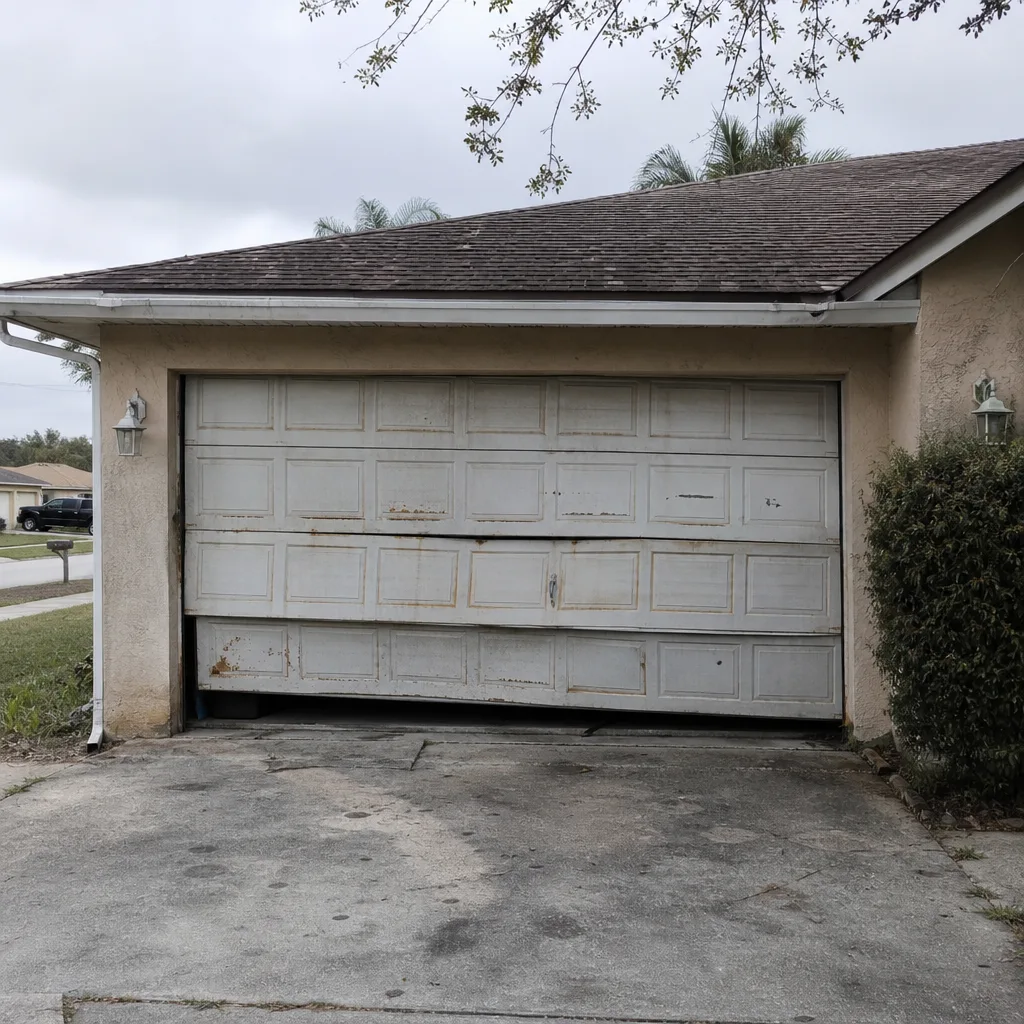 Before
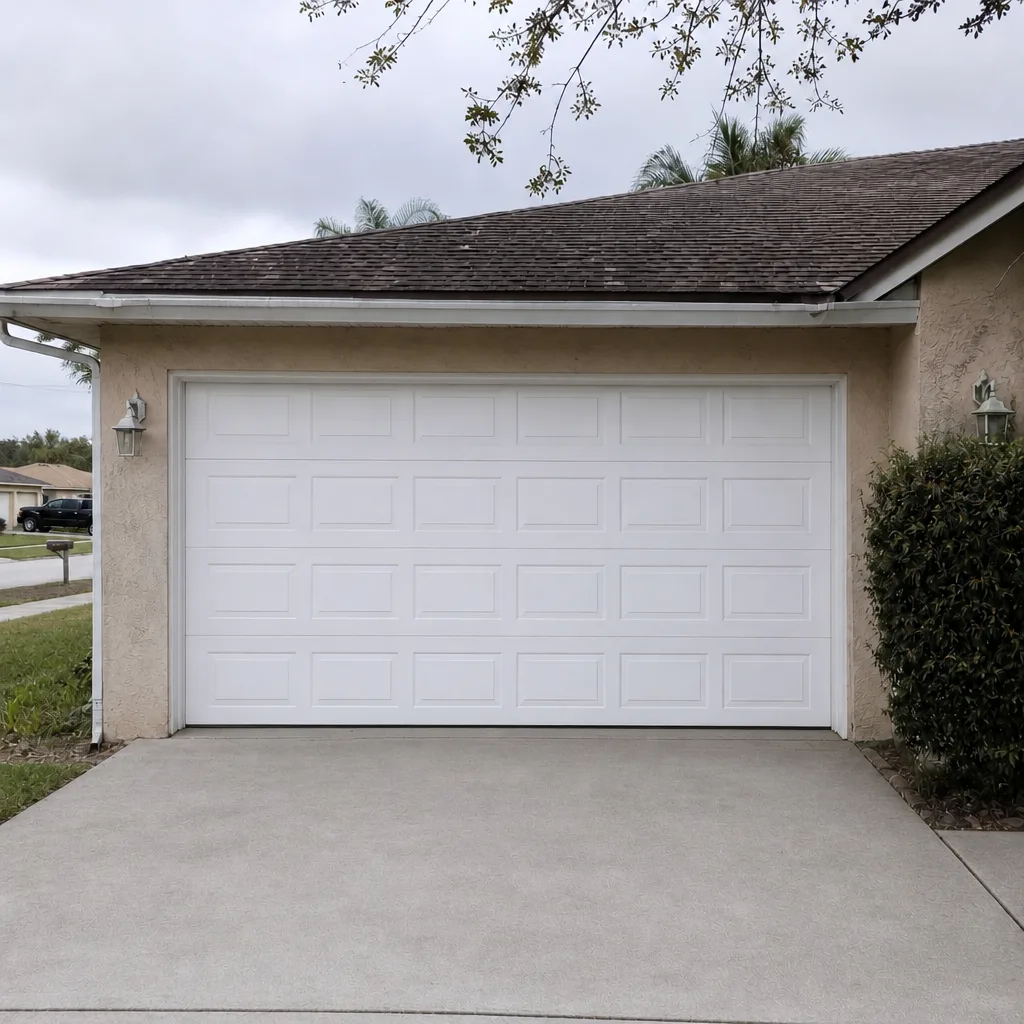 After
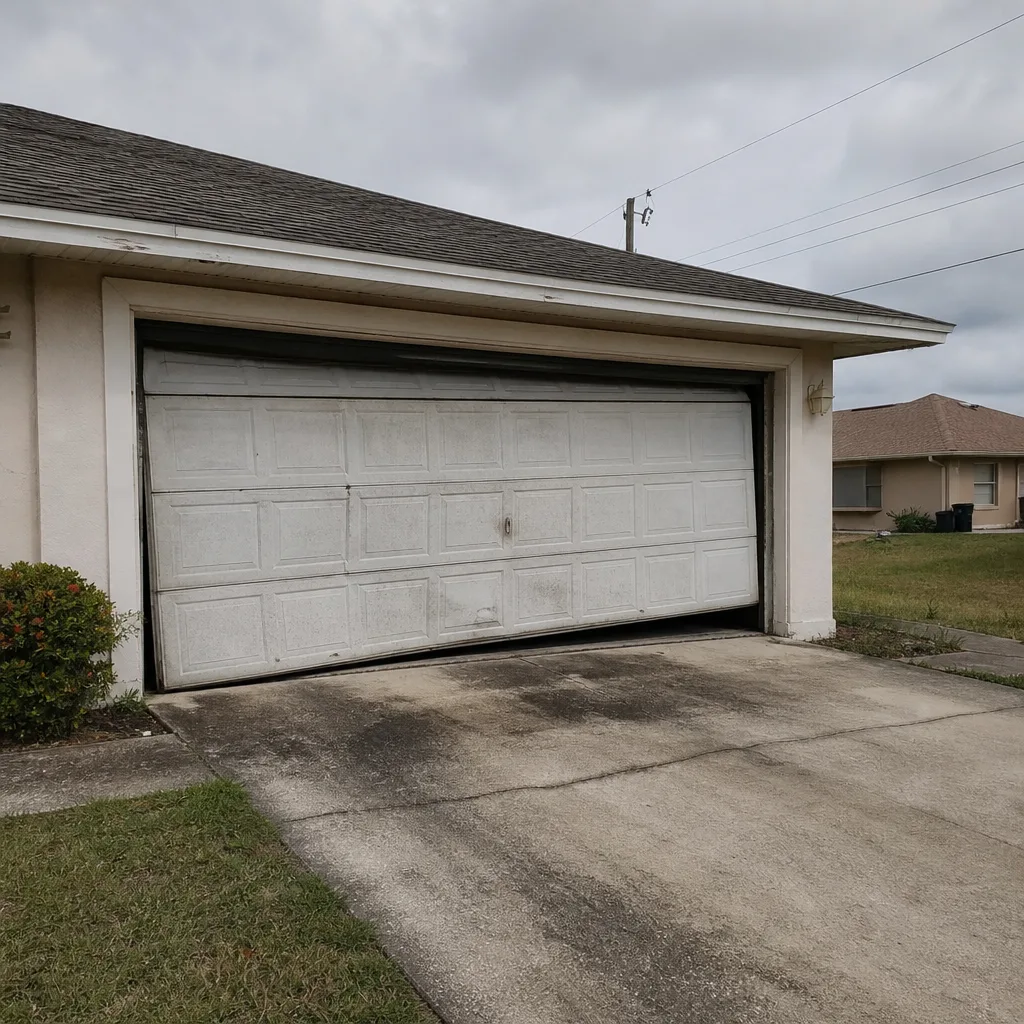 Before
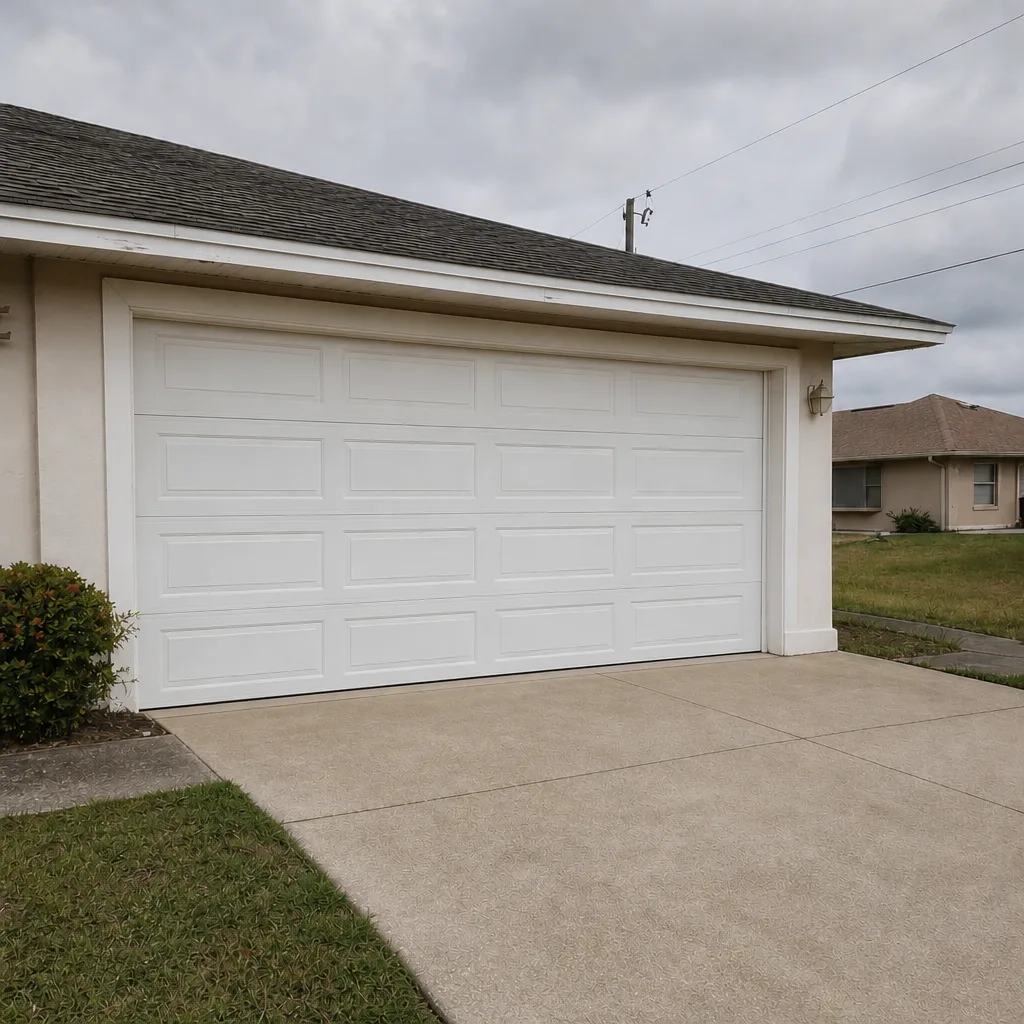 After
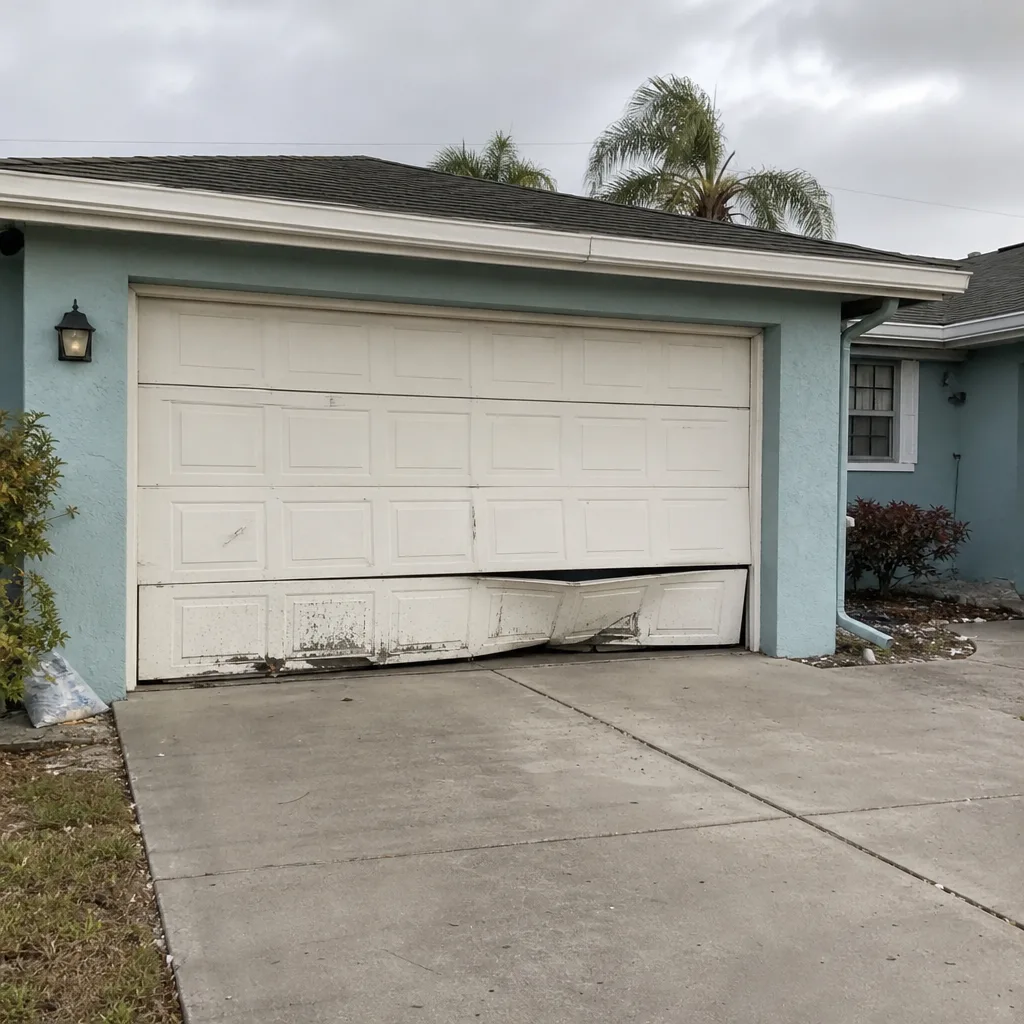 Before
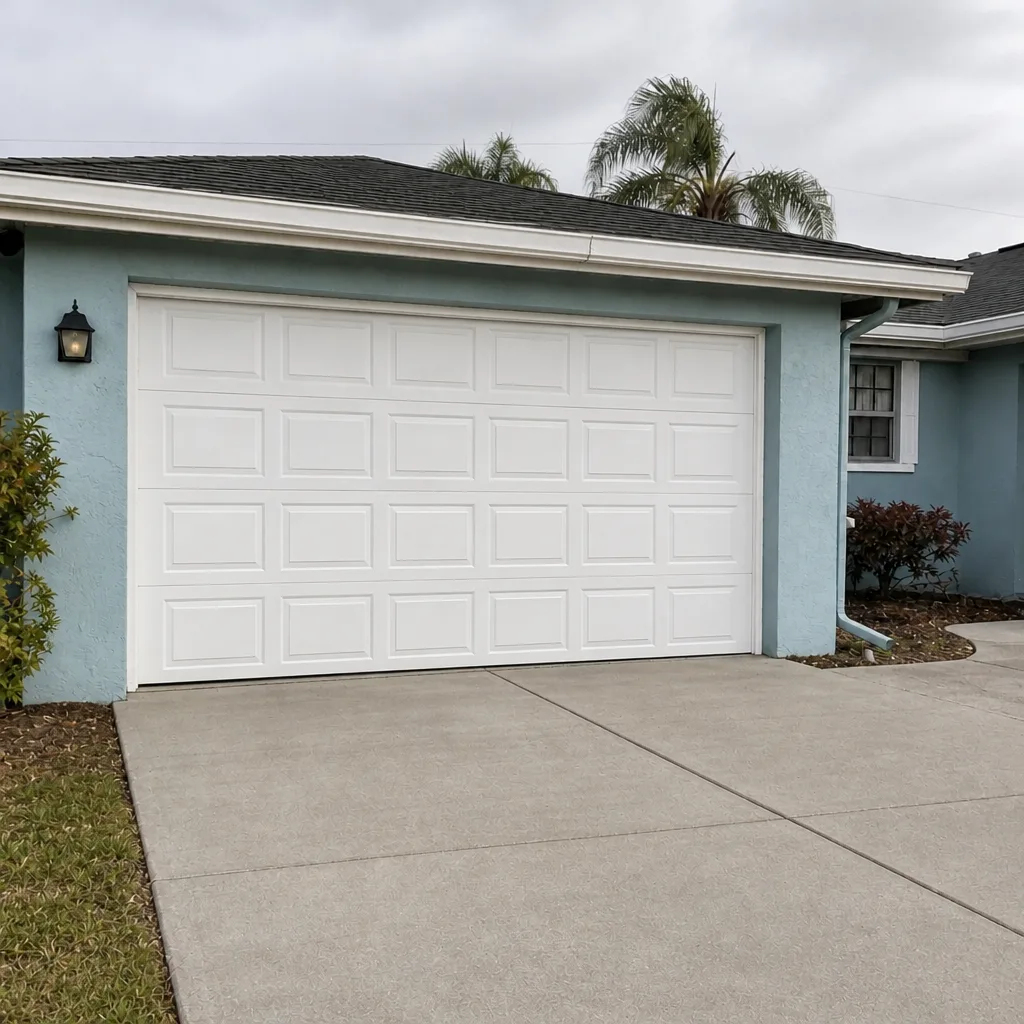 After
When to Call a Professional
Call a professional on any garage door permit or code question you can’t get a straight answer on, and call one immediately on anything involving springs, cables or a door that’s off-track. Those parts are under extreme tension, and they’re not a homeowner repair. Call us when you need a door replacement quoted with the Product Approval and wind-load question already answered, when an inspection issue needs to be remediated, or when a home sale is hung up on a missing permit. If your existing door has a broken spring or a snapped cable, that’s a same-day call, not a permit question. Cape Coral Garage Door Repair Co offers free estimates in Cape Coral – call (855) 658-4296. We work across the major brands homeowners actually own, including LiftMaster and Chamberlain, so you’re not stuck being told your model isn’t serviceable. We answer 24/7, with fast dispatch from 7am to 7pm, Sunday through Friday.
Frequently Asked Questions
In nearly all cases, yes. A full garage door replacement in Cape Coral alters a wind-resistant opening and requires a permit and a door covered by a Florida Product Approval. Routine repairs – springs, rollers, openers, tracks – are normally treated as maintenance and don’t trigger one. Call (855) 658-4296 for an exact quote on your job – estimates are free.
Permit fees are set by the city based on the job’s valuation, so the only reliable number comes from the building department or from the written quote your contractor provides. What we can tell you is that the price is quoted and agreed before any work starts, and the written estimate sets the final price. Call (855) 658-4296 for a free estimate on the door portion.
It’s the state’s documented proof that a specific door model, at a specific size and configuration, meets the wind-load requirements of the Florida Building Code. The NOA number is how the inspector verifies the installed door matches the approved assembly. Without it, a compliant installation is hard to prove. Keep the listing with your home records.
No, not after the written estimate is agreed. The price is quoted and agreed before any work starts, and that written estimate sets the final price. The measure and the door selection happen before the quote is finalized, so the number you agree to is the number on the invoice. Call (855) 658-4296 for an exact quote – estimates are free.
It can. An undocumented door is a compliance question for an insurer reviewing a wind claim, and it’s a flagged item for a buyer’s inspector and title search during a sale. The remedy is documentation or reinstallation, and both cost more than pulling the permit at the time of installation. If your file is thin, call us at (855) 658-4296 and we’ll walk through what’s needed.
The local professionals we connect you with are licensed and insured as Florida requires. We can work with your insurer on documentation, and the contractor handling your permit holds the license on record. Call (855) 658-4296 – estimates are free.
Written by the team at Cape Coral Garage Door Repair Co.
The Bottom Line
A Cape Coral garage door replacement is a permitted job with a wind-load requirement and an inspection attached. The door you buy has to match an approved assembly for your specific opening, the licensed installer pulls the permit and calls the inspection, and you keep the closed permit and NOA listing with your home records. Springs, openers and hardware are maintenance and don’t normally need a permit. Get the permit question answered before the door is ordered, keep the paperwork, and the rest of the transaction is simple. When you’re ready to price the door, call (855) 658-4296 for a free estimate.
Written by the team at Cape Coral Garage Door Repair Co.