
Last updated November 21, 2026
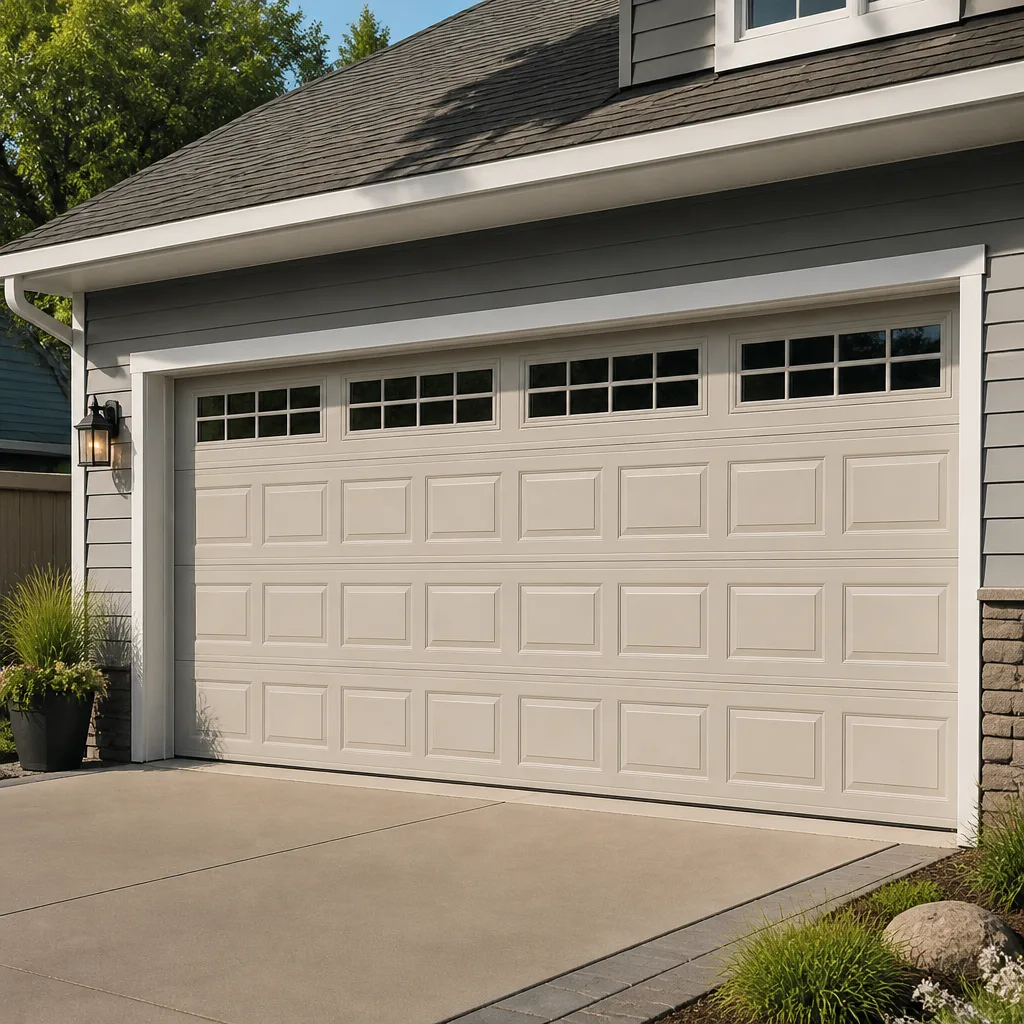 Raised-panel steel
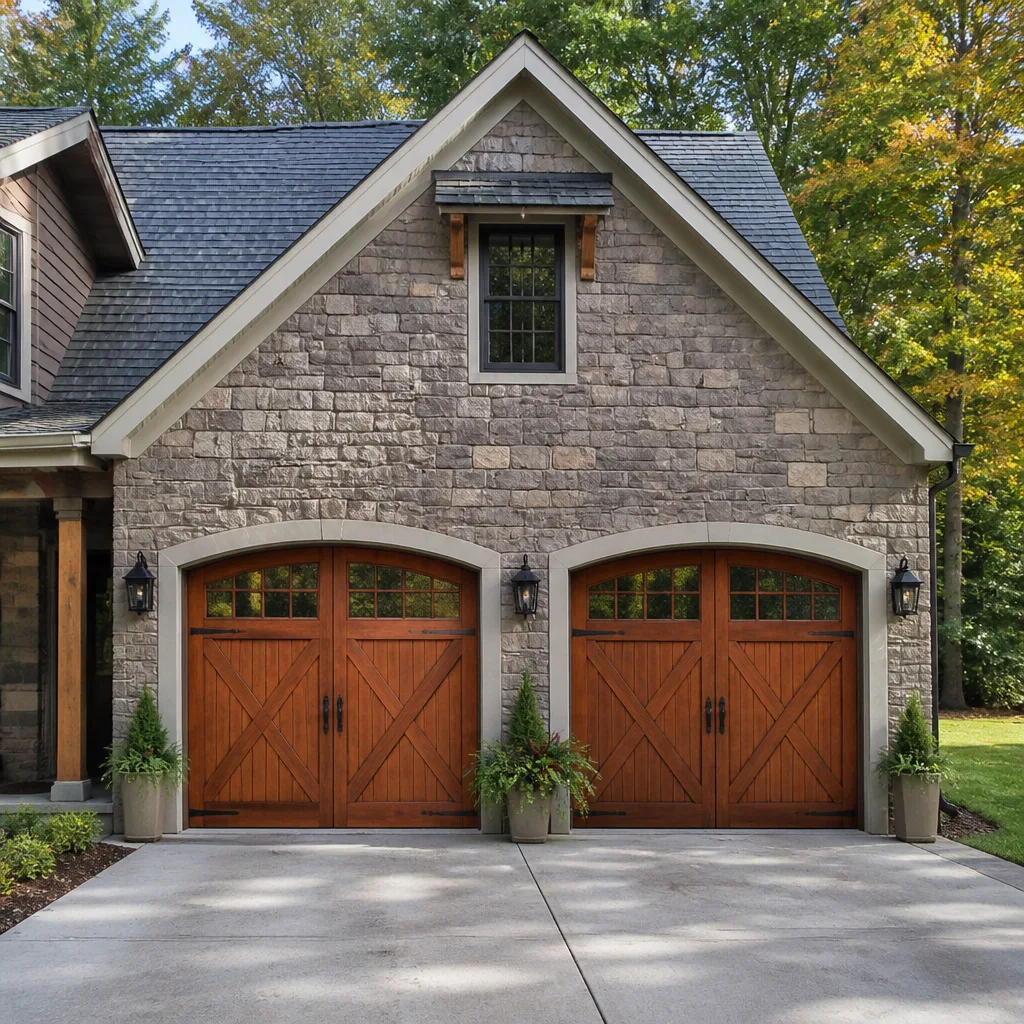 Carriage house
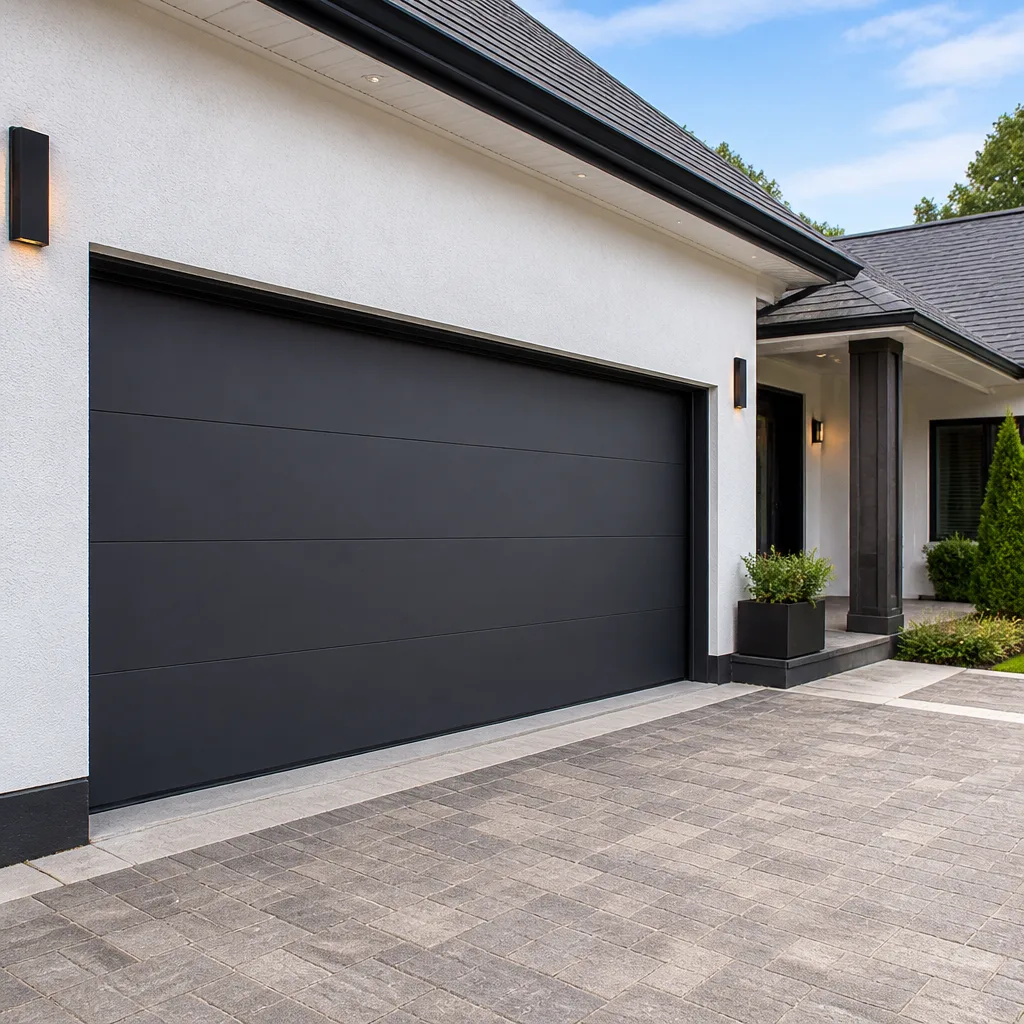 Modern flush
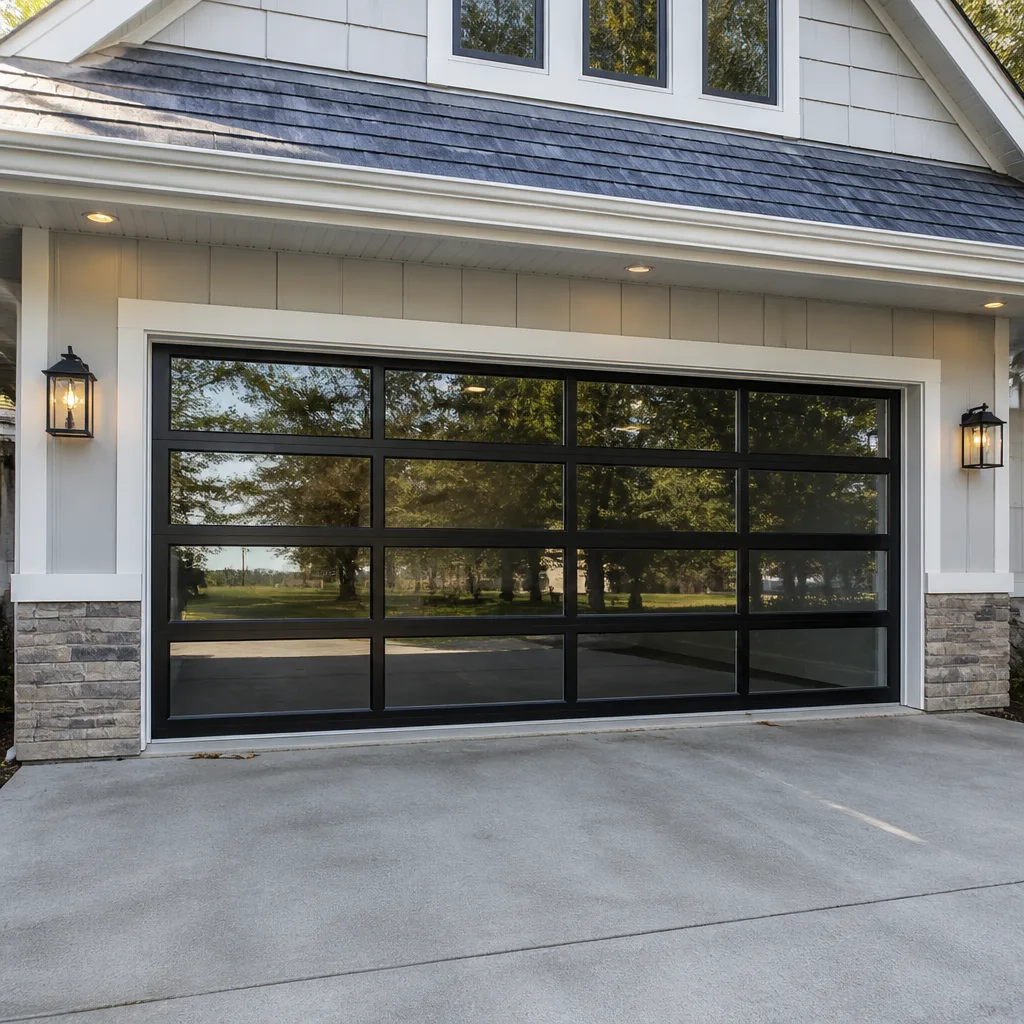 Full-view glass
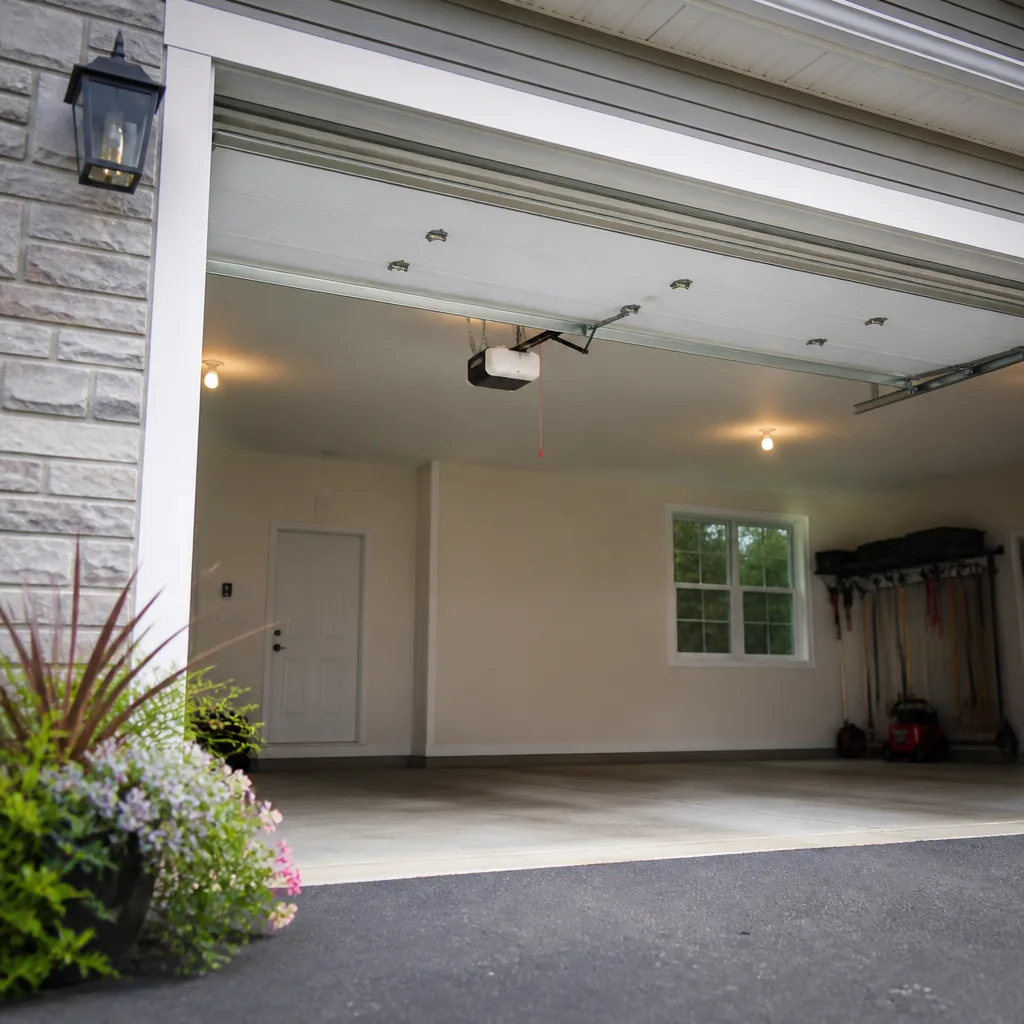 LiftMaster openers
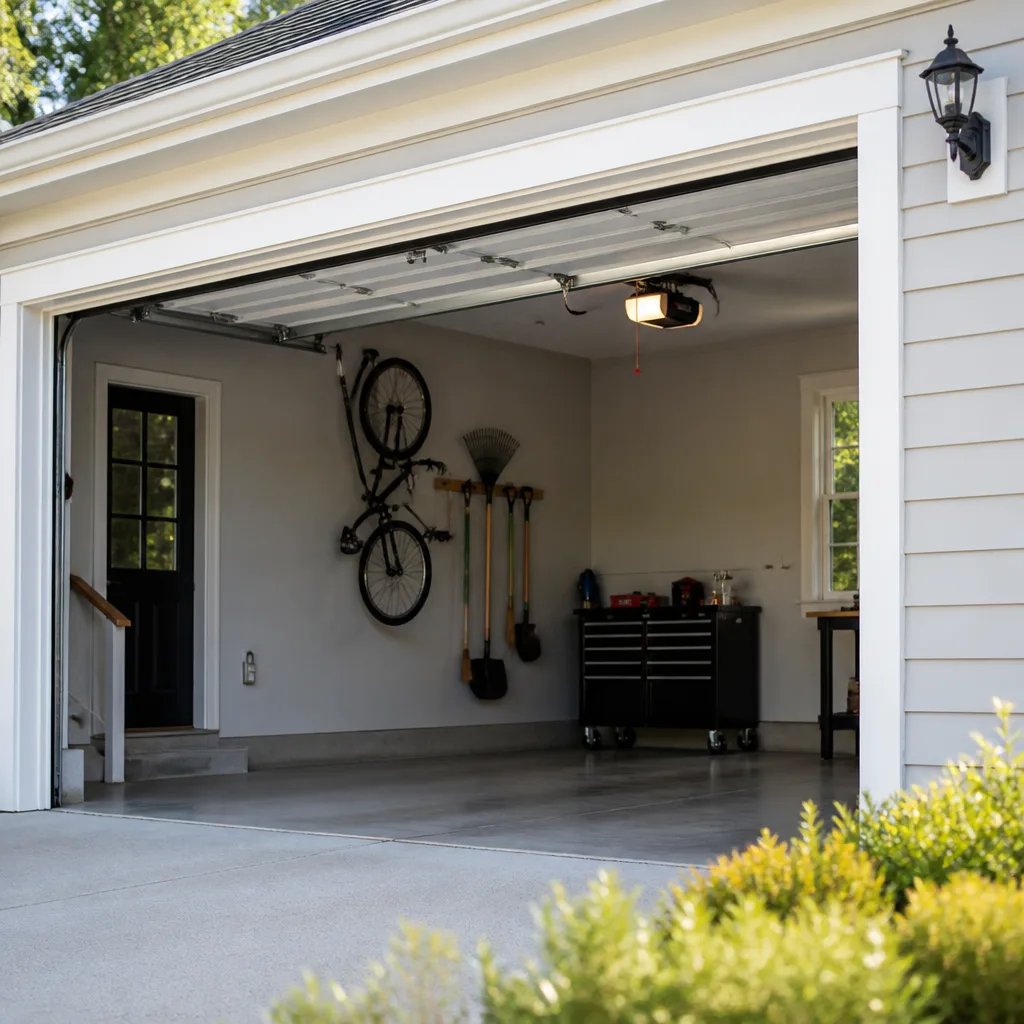 Chamberlain openers
Full 25-point door and opener safety check with every visit - springs, cables, rollers, tracks, and your LiftMaster or Chamberlain opener included
You get a price before we start. It does not change when the pro arrives.
Get your free estimateGarage Door Repair Troubleshooting in Cape Coral: Common Problems and How to Fix Them
The wrong diagnosis is how a minor spring adjustment turns into an expensive service call, and it happens more often than any company will admit. A door that won’t open gets blamed on the opener when the spring is actually the problem. A grinding noise gets blamed on the track when the rollers are shot. Before anyone touches anything, it pays to understand which of the five main systems is failing. In this guide, we map symptoms straight to causes across Cape Coral doors, openers, springs, sensors, and tracks, and we draw the line clearly between what you can safely adjust and what needs a trained technician. You’ll learn how to describe the problem precisely, spot the common misdiagnoses, and avoid paying for work you don’t need.
Quick Answer
Most garage door problems fall into five categories: spring and cable failure, opener or logic board trouble, sensor misalignment, roller and track wear, or door balance and alignment issues. Match the symptom to the system first, then decide whether it’s a safe homeowner fix (photo-eye alignment, limit screw adjustment) or a job for a technician (springs, cables, drums). If the door won’t move at all and you hear a bang, that’s a spring, not an opener, and it’s a hands-off job.
Styles & brands we work with
- Raised-panel steel
- Carriage house
- Modern flush
- Full-view glass
- LiftMaster openers
- Chamberlain openers
Table of Contents
- Start Here: How to Read a Garage Door Symptom
- The Five Root Causes Nearly Every Cape Coral Problem Traces Back To
- Symptom-to-Cause Mapping: Noise, Movement, Opener, Sensor, and Track
- Why Cape Coral’s Humidity Accelerates Specific Failure Points
- What You Can Safely Adjust vs. What Requires a Technician
- How to Describe Your Problem So the Right Parts Show Up
- Common Misdiagnoses and How to Tell the Difference
- Is It the Opener or the Spring?
- When to Call a Professional
- Frequently Asked Questions
Start Here: How to Read a Garage Door Symptom
Troubleshooting a garage door is really a matter of reading symptoms correctly. The door tells you what’s wrong in exactly three ways: how it sounds, how it moves, and what the opener’s light or remote is doing. Each of those signals points to a different part of the system. A door that slams shut with a bang and won’t lift has a mechanical problem, not an electronic one. A door that opens an inch then reverses is usually a sensor or a travel-limit issue. A door that runs but never moves the load is often a stripped gear in the opener.
The reason this matters in Cape Coral is simple: humidity and heat stress springs, rollers, and opener motors faster than most homeowners expect, so failures here can happen closer together on the timeline than the manual suggests. Still, the symptom set is the same no matter the brand or year.
Before diving in, run through our first checklist:
- Clear the area around the door and don’t stand under it while testing.
- Listen to the motor. Does it run but the door stays put, or is there no motor sound at all?
- Watch the door move. Does it move evenly, shimmy, or stop partway?
- Check the photo-eye lights at the bottom of the tracks. Both should be lit and steady.
- Try the wall switch and the remote separately to isolate the problem.
Whatever you find, keep the door on the ground until you know which system is involved. If the door is the main way you get in and out, note what you see and head to the rest of the guide before acting.
The Five Root Causes Nearly Every Cape Coral Problem Traces Back To
When we troubleshoot a door in Cape Coral, we’re checking five things in order: the torsion or extension spring, the cables and drums, the opener and its logic, the photoelectric safety sensors, and the mechanical wear on rollers, hinges, and the track. Nine out of ten service calls trace back to one of those five, and the ones that don’t are usually a combination of two.
That order matters. Spring and cable problems are safety-critical, so they get checked first. Opener and sensor problems are cheap to fix but often get misdiagnosed as mechanical issues, so checking the mechanical system first rules out the expensive scenario. Roller and track wear is the most common cause of noise complaints, and it’s also the most misattributed. Here’s the mental map:
- Spring and cable: The door feels heavy, slams down, or won’t lift. Loud bang from the ceiling.
- Opener and logic board: Motor runs but the door doesn’t move, or the door reverses on its own without an obstruction.
- Safety sensors: The door won’t close unless you hold the wall switch. One sensor light is off.
- Roller and track wear: Grinding, squeaking, or scraping during travel, especially at the rails.
- Balance and alignment: The door moves more on one side than the other, binds, or hangs crooked.
Cape Coral homes tend to lean on the same patterns: doors that get direct afternoon sun into the garage and doors that get regular use as a primary entry on a driveway. When the garage is the entry point, wear on the rollers and opener cycles builds faster than a garage used only for parking.
Symptom-to-Cause Mapping: Noise, Movement, Opener, Sensor, and Track
This is the section to read if you already know what’s failing but don’t know which part is responsible. Here’s the symptom-to-cause map we use on every Cape Coral visit:
Noise symptoms
- Loud bang from above = broken torsion spring (or an extension spring that has let go). This is the classic, and it’s never a DIY job.
- Squeaking or grinding that builds over days = worn rollers, dry hinges, or the door rubbing the track.
- Rattle at the opener rail or motor housing = loose hardware, a worn opener drive, or an aging Chamberlain or Genie unit with a tired motor.
Movement symptoms
- Door opens an inch and reverses = sensor obstruction, sensor alignment issue, or a travel limit that drifted.
- Door won’t lift at all, motor runs = broken spring, snapped cable, or stripped opener gear.
- Door travels unevenly, one side lagging = broken spring on one side, a bad drum, or a track that has been pushed out of alignment.
Opener symptoms
- Remote works sometimes, wall switch works fine = battery, remote pairing, or interference.
- Wall switch doesn’t work either = logic board, safety reversal, or a lost signal from a smart hub.
- Opener lights flash and the door won’t close = safety sensor fault.
Sensor and track symptoms
- One photo-eye is dark = the receiving sensor is misaligned or has a dirty lens.
- The door drags visibly on one side = bent track, loose track bracket, or a worn roller pulling out of the channel.
Use these as a first-pass guess, not a verdict. If the door is the only entry to your garage and you can’t lift it a full cycle, garage door repair is what you need, not a repair attempt of your own.
Why Cape Coral’s Humidity Accelerates Specific Failure Points
Cape Coral’s climate accelerates two failure points more than anything else: spring and cable corrosion, and roller wear. Humidity in the air works continuously on the metal parts in your track and opener rail, and door cycles simply add to the load. In our experience, springs and rollers in Cape Coral tend to dress out sooner than in the drier parts of Florida, and the fix is straightforward when caught early.
Here’s what actually happens:
- Torsion springs rust at the coils and lose tension faster. When they snap, they snap hard. That’s not a reflection of the brand, it’s the metal doing what metal does in humid air.
- Steel rollers corrode and stop rolling smoothly, so the door drags and the opener works harder. Nylon rollers hold up better but the bearings still take a beating.
- Cables and drums pick up surface corrosion. The cables don’t usually fail from rust alone, but the corrosion doesn’t help and can make a failing cable more brittle.
- Opener logic lives in a garage that gets hot and damp, so an older Genie or Craftsman unit may have trouble sooner than expected if the housing isn’t ventilated.
We’re not saying every Cape Coral door is on a clock. We’re saying that if you’re comparing two similar doors, and one has never had a spring service while the other has, the one with the original spring is the one to keep an eye on. Also keep an eye on the door’s operation on the hottest and most humid weeks of the year, when minor issues tend to become obvious. The Cape Coral Garage Door Repair Co homepage is a good starting point if you want to see what we cover.
What You Can Safely Adjust vs. What Requires a Technician
The line between a safe homeowner fix and a technician job is drawn by stored energy. Anything that holds a door’s weight under tension – the springs, the cables, the drums, and the brackets that mount them – is a hands-off job. The rest, including limit screws and photo-eye alignment, is a reasonable homeowner adjustment if you take your time.
Here’s the breakdown:
Safe for a homeowner
- Photo-eye alignment. The two sensors at the bottom of the tracks should point at each other. If one light is dark, adjust it gently until both lights are solid, then test the door.
- Travel limit screws. If the door goes too far up or down, or reverses a few inches above the floor, the open and close limit screws on the opener housing can be adjusted a quarter turn at a time. Check the manual for your model.
- Force settings. Some openers include a force adjustment; use it sparingly and only after ruling out a mechanical bind.
- Battery, remote pairing, and app or Wi-Fi reconnects. Try a fresh battery and re-pairing before assuming the opener is dead.
Requires a technician
- Torsion and extension springs. A wound torsion spring stores enough energy to cause serious injury. Never attempt to wind, unwind, or remove one.
- Cables and drums. Cables are under load and can whip if they slip. Don’t touch them.
- Roller replacement on high-tension doors. Simple in theory, but a door that’s still under tension on one side binds as you pull the roller. Best left to a tech with the door supported.
- Track realignment after impact. Track brackets carry load, and forcing a bent track can crack it.
At Cape Coral Garage Door Repair Co, spring and cable work is handled as a dedicated service because it’s the highest-risk task in the trade. That’s not a marketing line; it’s the difference between a repair and a hospital visit. Our technicians have up to 14 years of experience, and the work is done by the same crew that diagnoses it.
How to Describe Your Problem So the Right Parts Show Up
Misfires happen when a homeowner describes what they think the problem is instead of what they observe. The most useful call to us is specific: what the door does, what it sounds like, and what brand of opener is on the ceiling. That second one matters more than most people realize. We service eight of the most common residential brands, including Chamberlain, Genie, Clopay, and Amarr, so we can usually tell you in one call whether the part is on hand or needs to be ordered.
Here’s the checklist to run before calling anyone:
- Find the brand. The opener housing usually has a label on the back panel or under the light cover. Snap a photo of it.
- Note the model if you can find it. That’s the string of letters and numbers below the brand.
- Describe the door’s motion. Does it open partway? Reverse immediately? Stay put?
- Describe the noise. Bang, grind, squeak, or silence?
- Note when it started. After a power flicker? After a storm? Gradually over weeks?
- Report the photo-eye status. Both lights solid, one dark, or both dark?
- Tell us what you’ve already tried. If you already adjusted the limits or swapped a battery, say so.
We also stock and source parts for common repairs, so the odds of a one-visit fix are better when the description is precise. “It makes a loud bang and won’t lift” tells us to bring spring parts. “It opens a foot then reverses” tells us to bring sensors and possibly a logic board. “It grinds on the way up” tells us to bring rollers. The difference in time saved is real. If your opener is the system that’s failing, garage door opener repair covers the full range from legacy residential models to modern smart openers.
Common Misdiagnoses and How to Tell the Difference
The two misdiagnoses we see most often in Cape Coral are opener failures blamed on springs, and roller failures blamed on tracks. Both send money in the wrong direction. Here’s how to tell them apart before you spend a repair budget on the wrong system.
Opener blamed for a spring failure
A homeowner hears a loud bang, the door drops, and the opener motor still runs. The instinct is that the opener is broken. In fact, the opener is often fine – it’s just spinning with nothing to push against because the spring released. The giveaway: the door is dead weight and needs brute force to lift by hand. If the door feels like a loaded barbell, it’s a spring or cable problem, not the opener. Pull the manual release only if you can safely lift the door, and don’t run the motor repeatedly while it’s unloaded.
Track blamed for a roller failure
The door grinds, so the track gets blamed. But if the track is visibly straight and the door still grinds, the rollers are the likely culprit. Look along the rollers: a flat spot, a broken wheel, or a roller that’s popped out of the channel means the roller itself is the problem. A bent track is usually visible from the ground as a kink, and it’s often accompanied by a door that shimmies or hangs on one side.
Sensor blamed for a limited travel problem
If the door goes up and down but stops short, the safety sensor isn’t usually the cause – the travel limits are. The difference: a sensor issue causes an immediate reversal, while a limit issue causes the door to stop partway or fail to close completely. Try holding the wall button to force the door down. If it closes and the opener looks normal, the sensors are likely fine and the limits are the problem.
Logic board blamed for a remote problem
Remotes and wall switches fail for different reasons. If the wall switch works and the remote doesn’t, the opener is fine. If neither works, the logic board or a power issue is more likely. Re-pair the remote and replace the battery before assuming the board is bad.
If the door won’t stay up, won’t stay down, or won’t move smoothly after these checks, it’s time for a technician. For a system-level view of what we cover, we offer full garage door installation as well, so a door that’s genuinely at the end of its life has somewhere to go.
Is It the Opener or the Spring?
If the opener motor runs and the door doesn’t move, it’s a spring or cable failure roughly nine times out of ten, not an opener failure. That single rule saves people a lot of money and a lot of frustration. The motor is doing its job – it’s just pushing against dead weight. Openers are not designed to lift a door without the mechanical assist from the spring system.
A quick self-check:
- Pull the manual release only if you can safely support the door while lifting it.
- Lift the door halfway by hand. A balanced door with intact springs should stay roughly where you leave it.
- If it comes crashing down or feels backbreaking, the springs are the problem.
- If it lifts easily and stays put, the door is balanced and the opener is the issue.
Never force a door with a broken spring back down. If the cables are slack, the door can shift suddenly. Put the manual release back and call a technician. For doors on LiftMaster or Craftsman units, the motor-running-but-door-not-moving pattern is nearly always mechanical, and a quick diagnosis confirms it in a couple of minutes.
See the difference
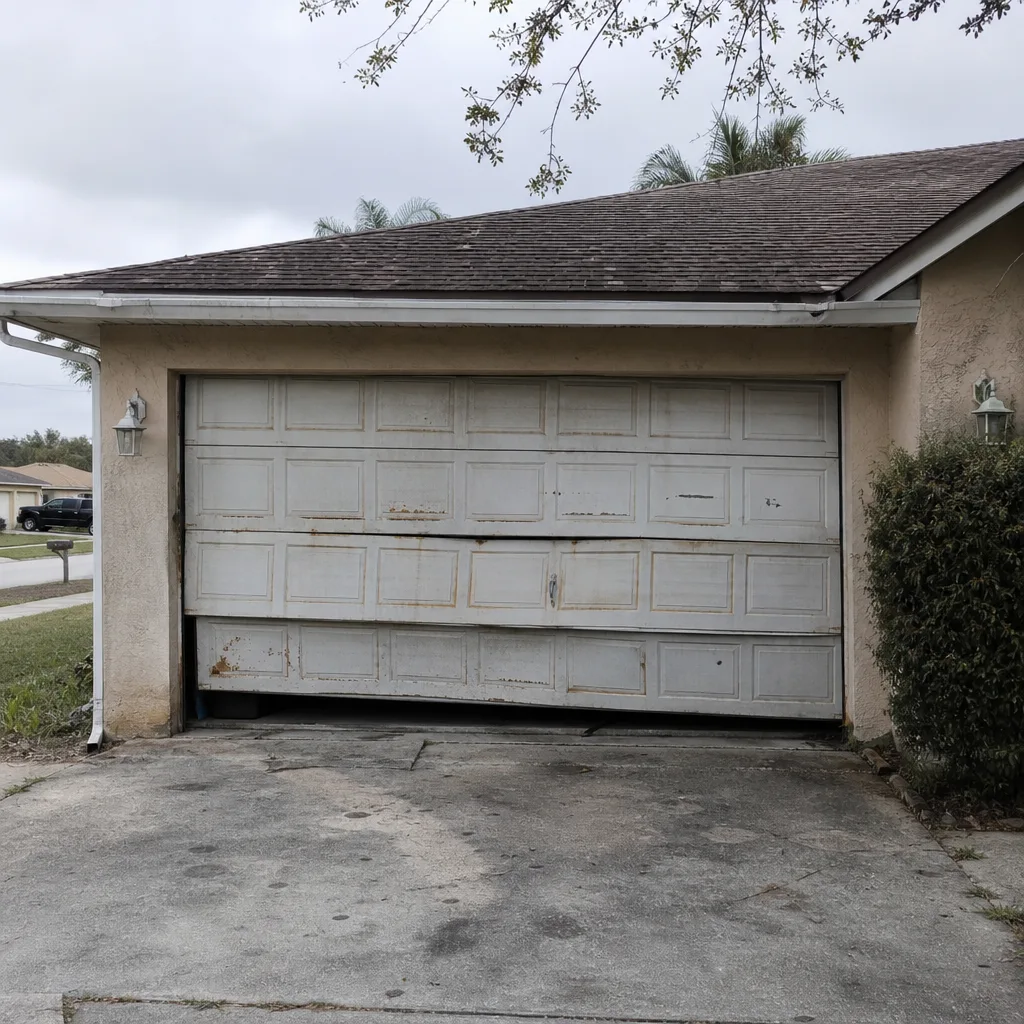 Before
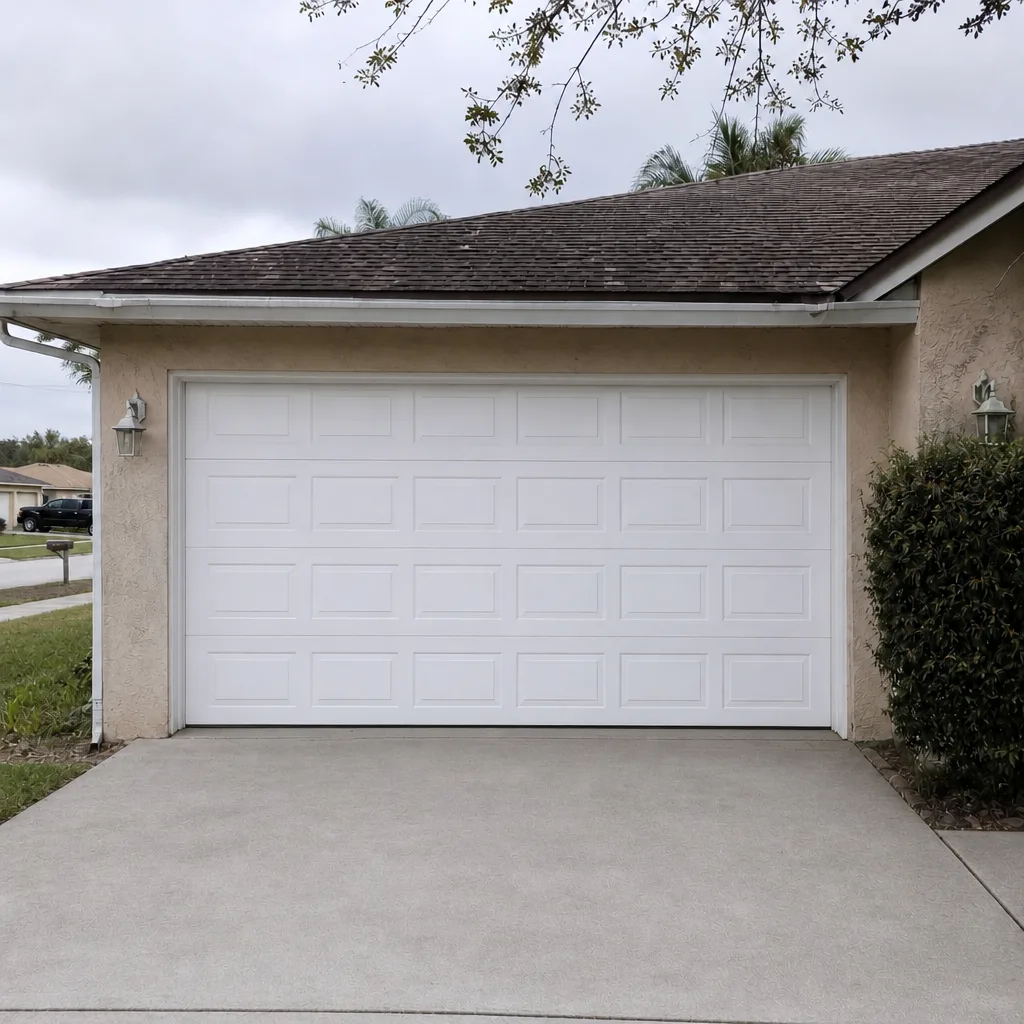 After
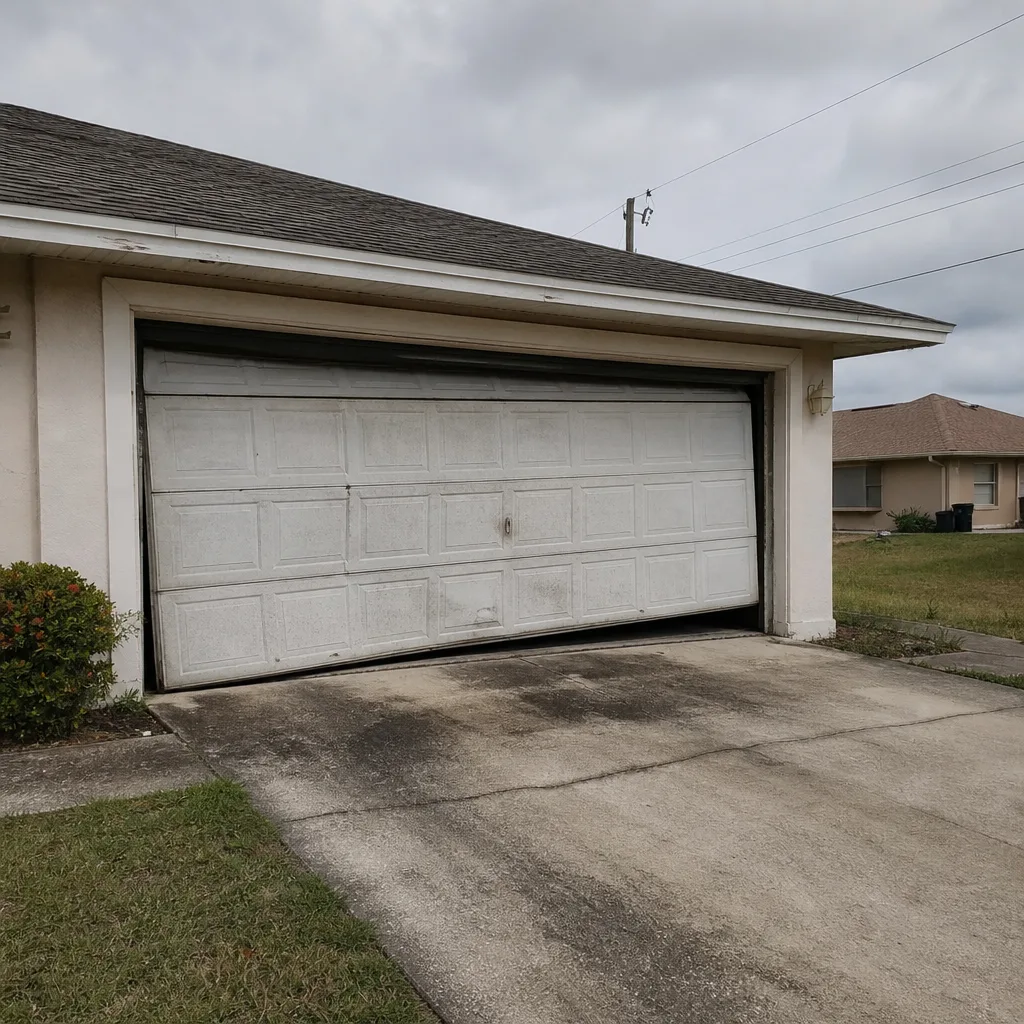 Before
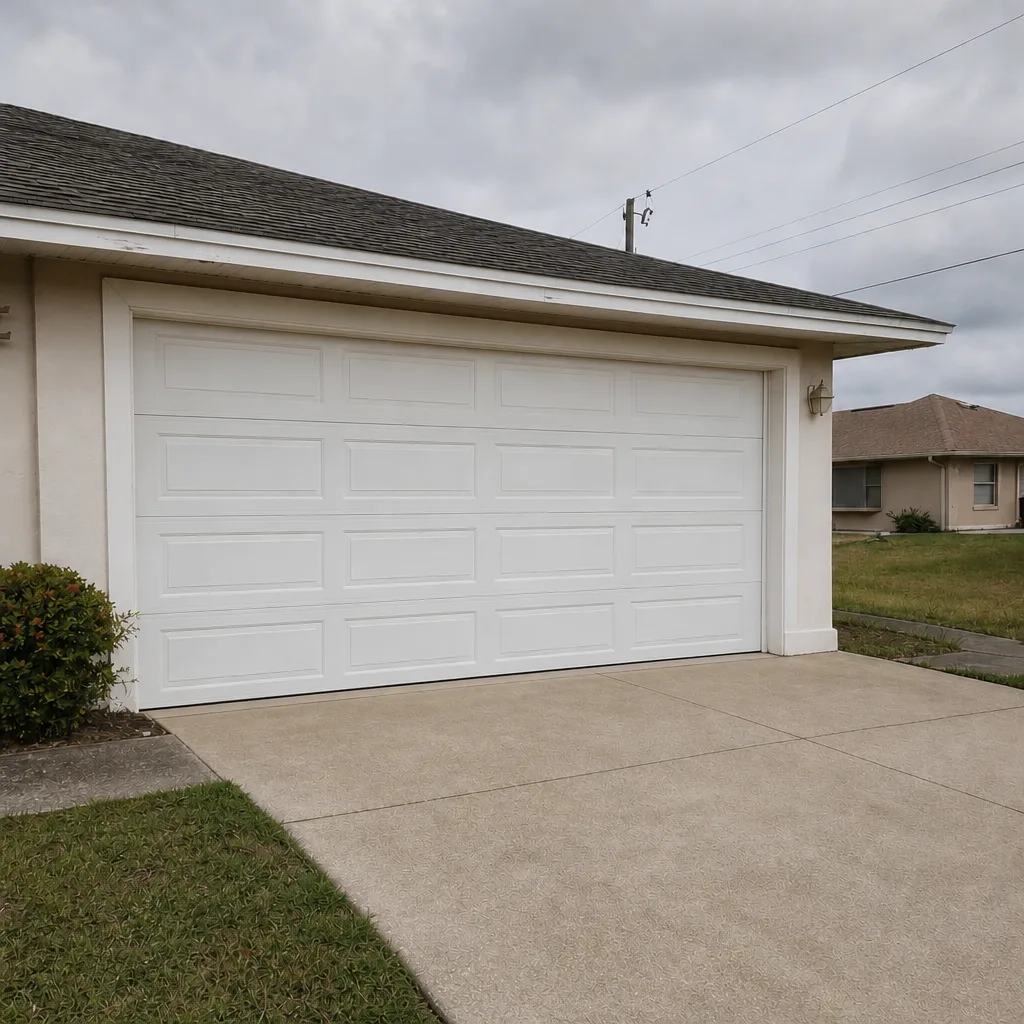 After
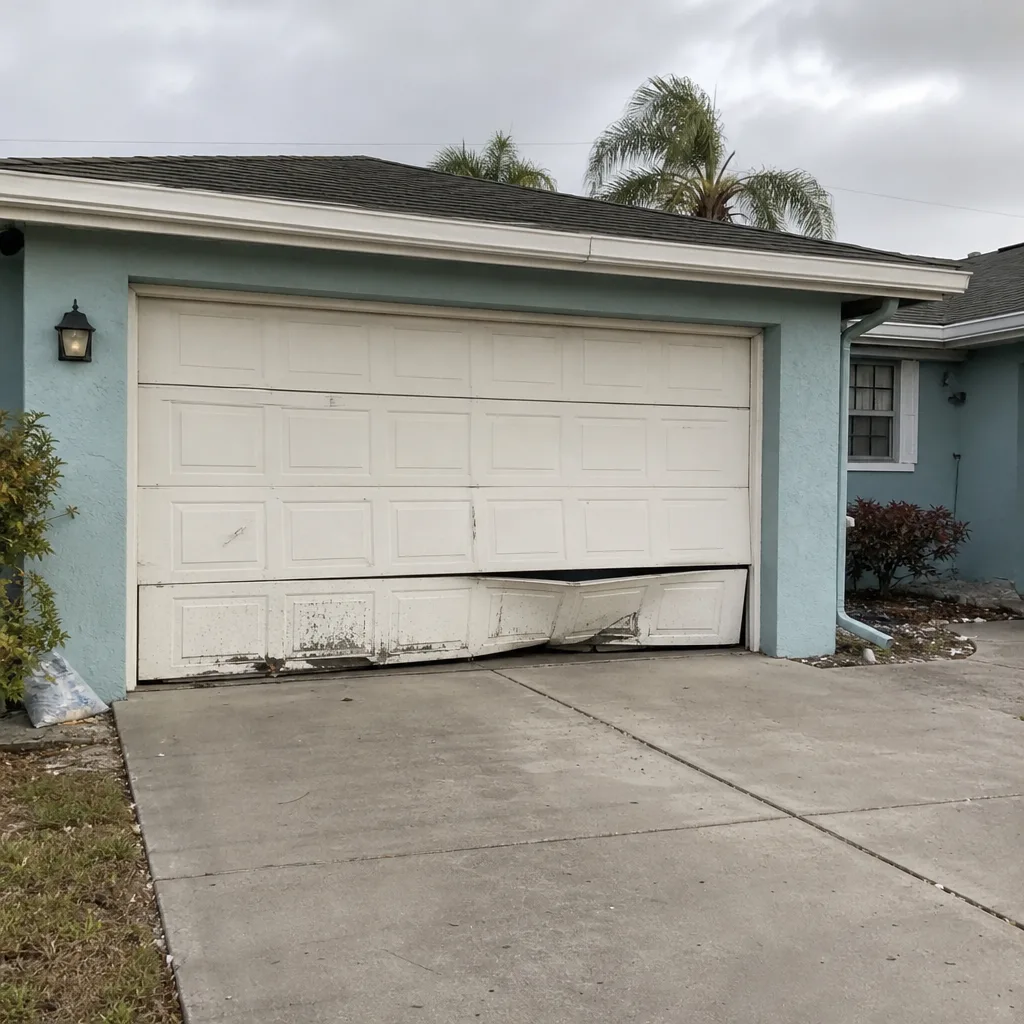 Before
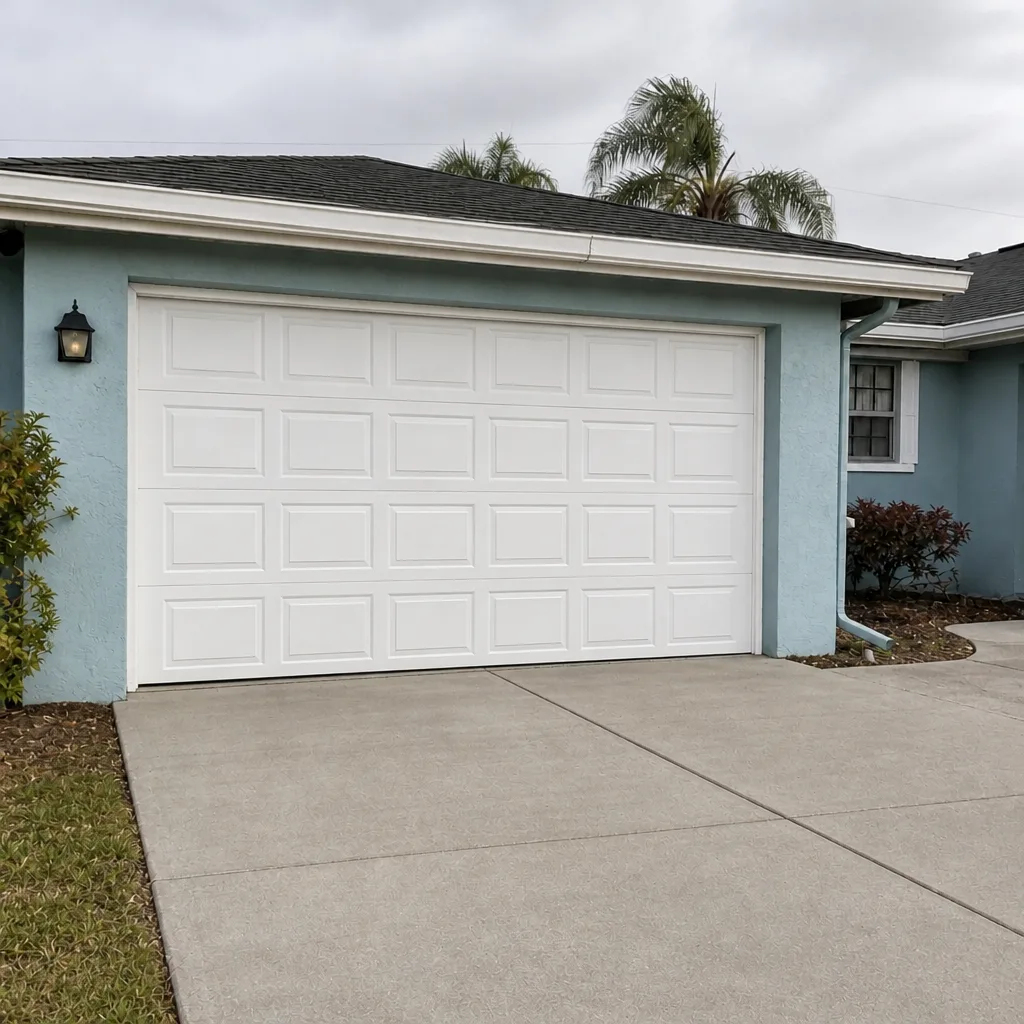 After
Common Mistakes to Avoid
- Blaming the opener before checking the springs. A motor that runs but doesn’t move the door is almost always a spring or cable problem, and buying an opener you don’t need is an expensive way to find that out. Check door balance by hand first.
- Forcing a bent track back into shape. A bent track that’s been forced can crack or tear at the brackets, and the door will then hang or bind worse. If the track is out of alignment, the right move is a technician with the door supported.
- Winding or unwinding a torsion spring yourself. The spring stores enough energy to cause serious injury. This is the single most dangerous DIY task in the trade, and no homeowner should attempt it.
- Ignoring a slow decline in the door. In Cape Coral’s humidity, springs and rollers wear gradually. If the door squeaks more than it used to or moves with a slight shimmy, that’s the early signal, not a one-off.
- Replacing a remote when the wall switch works fine. If the wall switch works, the opener is fine and the problem is the remote or the pairing. A new battery and re-pair usually solves it.
- Running the opener repeatedly on an unbalanced door. Doing this can burn out the motor or strip a gear, turning a cheap spring repair into a spring plus opener replacement.
- Assuming brand matters less than it does. When you know the brand – Chamberlain, Genie, Clopay, Amarr, or any of the other five we service – you get a faster diagnosis and the right part the first time. Grab the label off the opener before you call.
When to Call a Professional
Call a professional if any of these describes your door: the door won’t lift and the motor runs, the door has snapped or dropped on one side, a cable is visibly slack or damaged, the door hangs crooked or shimmies when moving, the photo-eye light won’t come on even after cleaning, or you hear a bang from the ceiling and the door won’t move. Those are the safety-critical situations where diagnosis over the phone saves you a repair bill and possibly an injury.
Smaller issues – travel limits, battery or remote pairing, or a single sensor light that’s off – are often fixable on your own. If you’ve worked through the symptom map and you’re still not sure which system is involved, call and describe what you’re seeing. Cape Coral Garage Door Repair Co offers free estimates in Cape Coral – call (855) 658-4296. We answer 24/7, and fast dispatch runs from 7am to 7pm, Sunday through Friday. The estimate is free and the price is agreed before any work starts.
Frequently Asked Questions
Most garage door repair jobs in Cape Coral are quoted per job by a written estimate, because the price depends on which system failed and what parts are needed. A sensor or limit adjustment costs less than a spring or cable replacement, and we confirm the price with you before work begins. Call (855) 658-4296 for an exact quote. Estimates are free.
In most cases, yes. We answer 24/7 and offer fast dispatch from 7am to 7pm, Sunday through Friday. If a call comes in outside those hours, it’s booked into the next opening. A technician confirms the diagnosis on site, and the price is set by a written estimate before any work starts.
No. We diagnose, we give you a written price, and you decide before we start. If the issue turns out to be more involved than the phone description suggested, we tell you before we touch anything – not after. Call (855) 658-4296 for a free estimate.
The local professionals we connect you with are licensed and insured as their state requires. We can confirm those details when you call. What we can tell you directly: spring and cable work is handled as a dedicated service, by technicians with up to 14 years of experience.
We service eight of the most common residential brands: LiftMaster, Chamberlain, Genie, Clopay, Amarr, Wayne Dalton, Craftsman, and Raynor. That covers most Cape Coral homes, whether you have a modern Wi-Fi opener or an older legacy unit. If you’re not sure of the brand, snap a photo of the label on the opener housing.
Most garage door problems are repairable, and replacement is only worth considering when the door itself is failing structurally or the cost of repair over time stops making sense. In our experience, a door with a broken spring or a tired opener is still a repair, not a replacement. We’ll tell you which one you’re looking at, and why.
The Bottom Line
Most garage door problems in Cape Coral trace back to springs, cables, openers, sensors, or rollers, and the fastest path to a fix starts with recognizing which one you’re dealing with. Springs and cables are never a DIY job. Sensors and limits often are. The common misdiagnoses – opener blamed for a spring, track blamed for a roller – cost more than they should, and a precise description of what your door does saves a second visit. If you’re unsure, call and describe what you hear and see. Cape Coral Garage Door Repair Co offers free estimates in Cape Coral – call (855) 658-4296. We answer 24/7, with fast dispatch from 7am to 7pm, Sunday through Friday.
Written by the team at Cape Coral Garage Door Repair Co.